The Upper Midwest has had a consistent, cyclical pattern of late, generally transpiring over the course of a week or so. Warm over the weekend and through the early part of the week, then the threat of a little bit of precipitation, very cold by Thursday and warming up again for the weekend. It’s happening this week, and it happened last week in Green Bay. Forecasters generally saw that pattern and latched on to it in their forecast. The issue came down to temperature, as forecasters were a couple degrees too warm for where this cycle ended up falling in line. There was a three way tie atop the standings in the end, with the Weather Service, Weather Nation and Forecast.io splitting the winning share. Actuals: Thursday – High 15, Low -7 Friday – High 31, Low 3
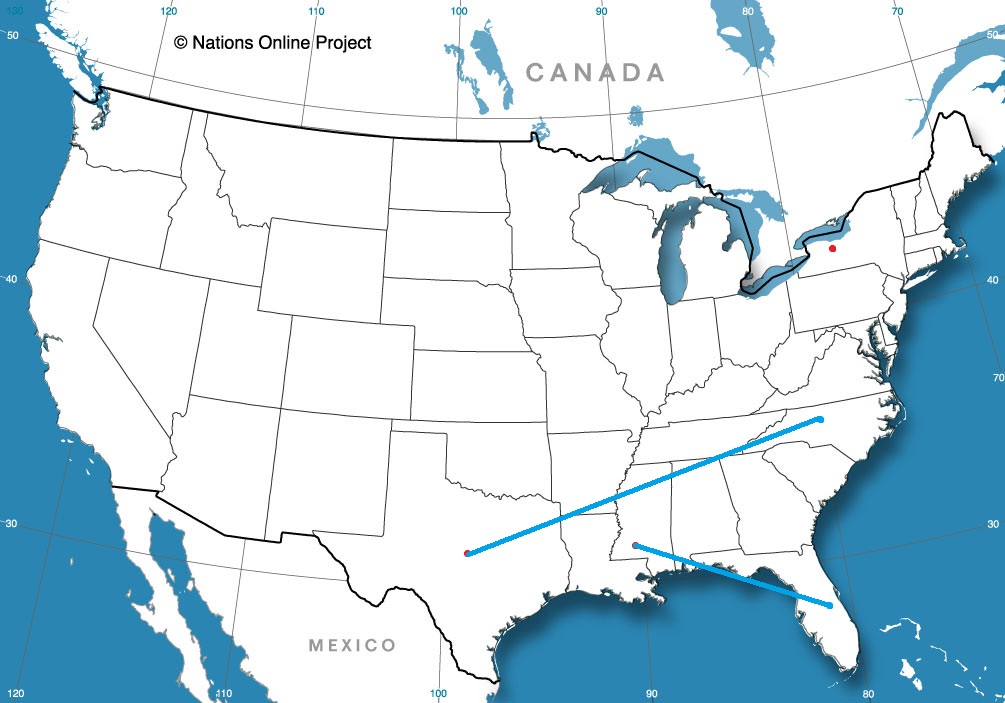
The drive from eastern Wisconsin to central South Carolina, if taken today, would be slowed mightily by rain gripping a wide swath of the eastern United States. We will start this two day trek tomorrow, though, so nothing to fear! The drive will cover 1,013 miles, which we will in turn cover at a pace of 65.3mph. The second day will be a little bit shorter, by a half hour or so, and our target distance on Tuesday will be 523 miles. all very manageable, yes?
DAY ONE (Tuesday)
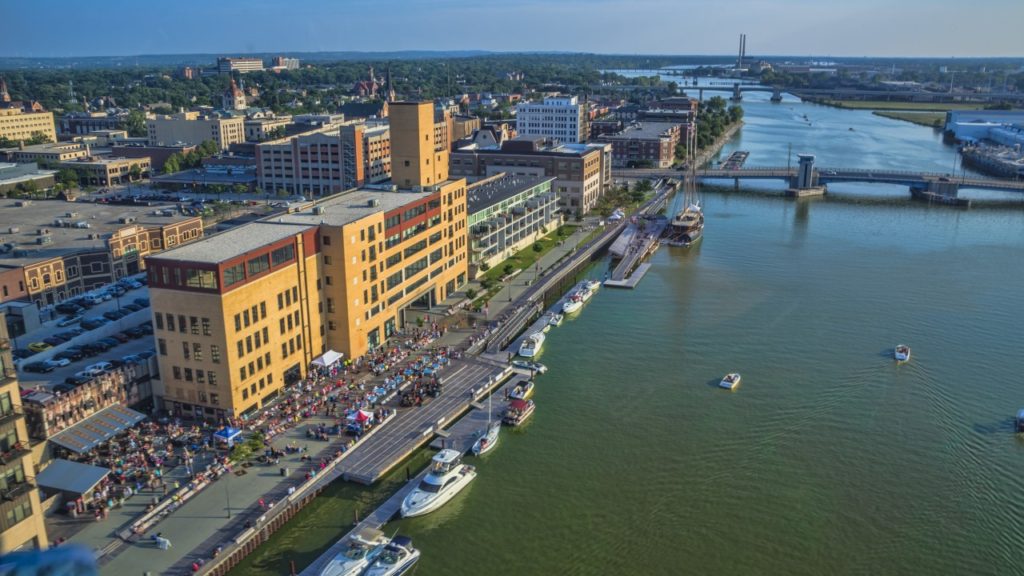
Green Bay, Wisconsin (By Chris Rand)
Low pressure moving through the eastern portion of the country is gradually unraveling today, and will continue to tomorrow. That means that precipitation which was translating quickly earlier in the week is slowing way down. None of it is reaching into Wisconsin, so the drive south towards the Illinois line should be drama free, but when we hit the Windy City, there is a pretty good chance it will be snowing. The snow will continue in this inverted trough south through Indiana, with a gradual change to rain south of Indianapolis. Precipitation won’t be heavy, but it won’t need to be to slow travel down. We’ll reach the eastern suburbs of Louisville, particularly the town of Middletown, by the end of the day.
DAY TWO (Wednesday) The back end of that system will swing to the south overnight. The dry slot will disappear from west of the Appalachians, and the light snow will return to our route, and last through our drive in Kentucky. We will turn south at Lexington and there might be a window of dry air by the time we reach Knoxville, which should last us through the rain shadow afforded by the Smokey Mountains from Asheville to Spartanburg, but the cold front associated with this low will start to redevelop on Wednesday afternoon. More rain will move into Columbia from the south, and will be there to greet us upon our arrival.
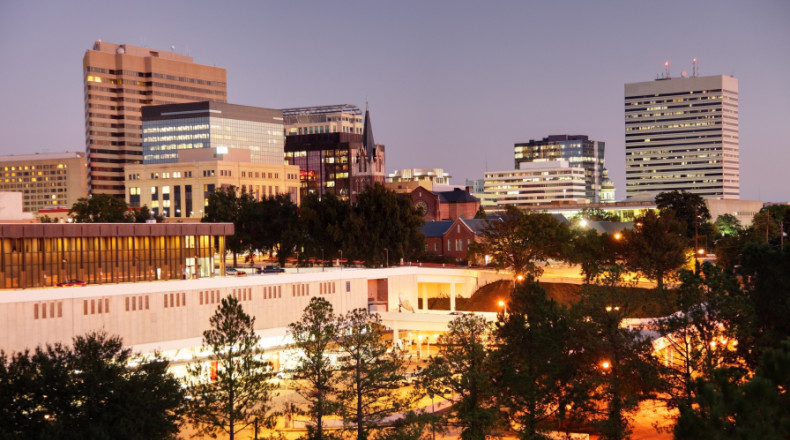
The capital city of South Carolina is also home to the University of South Carolina, and will be ground zero to what already seems like an endless election cycle, with this weeks’ pending primary coming to town.
At 1256AM, ET, Columbia was reporting clear skies with a temperature of 31 degrees. High pressure dominated the area, and the clear skies will lead to chilly temperatures for the morning in South Carolina, but the weekend will end pleasantly. Low pressure currently over the Four Corners is going to translate into the central Plains and continue eastward towards the Carolinas. It will deepen over Oklahoma, and develop some well defined warm and cold fronts. The warm front will emerge in central South Carolina by midday on Monday. Heavier showers and a stray thunderstorm will come to town in later in the day as the associated cold front arrives. Tomorrow – Mostly sunny, High 63, Low 28 Monday – Rain through most of the day, starting in the morning, High 58, Low 43
TWC: Tomorrow – Partly to mostly cloudy, High 61, Low 30 Monday – Occasional light rain. High 53, Low 44
AW: Tomorrow – Sun followed by increasing clouds High 60, Low 29 Monday – Cloudy and cool with a touch of rain High 54, Low 45
NWS: Tomorrow – Sunny, High 62, Low 27 Monday – Rain likely, mainly between 9am and 1pm, then showers after 1pm. High 56, Low 45
WB: Tomorrow – Sunny, High 58, Low 32 Monday – Rain likely in the morning then showers in the afternoon, High 53, Low 46
WN: Tomorrow – Mostly sunny, High 62, Low 27 Monday – Cloudy with light rain likely, High 56, Low 45
FIO: Tomorrow – Mostly cloudy throughout the day, High 61, Low 30 Monday – Light rain starting in the morning
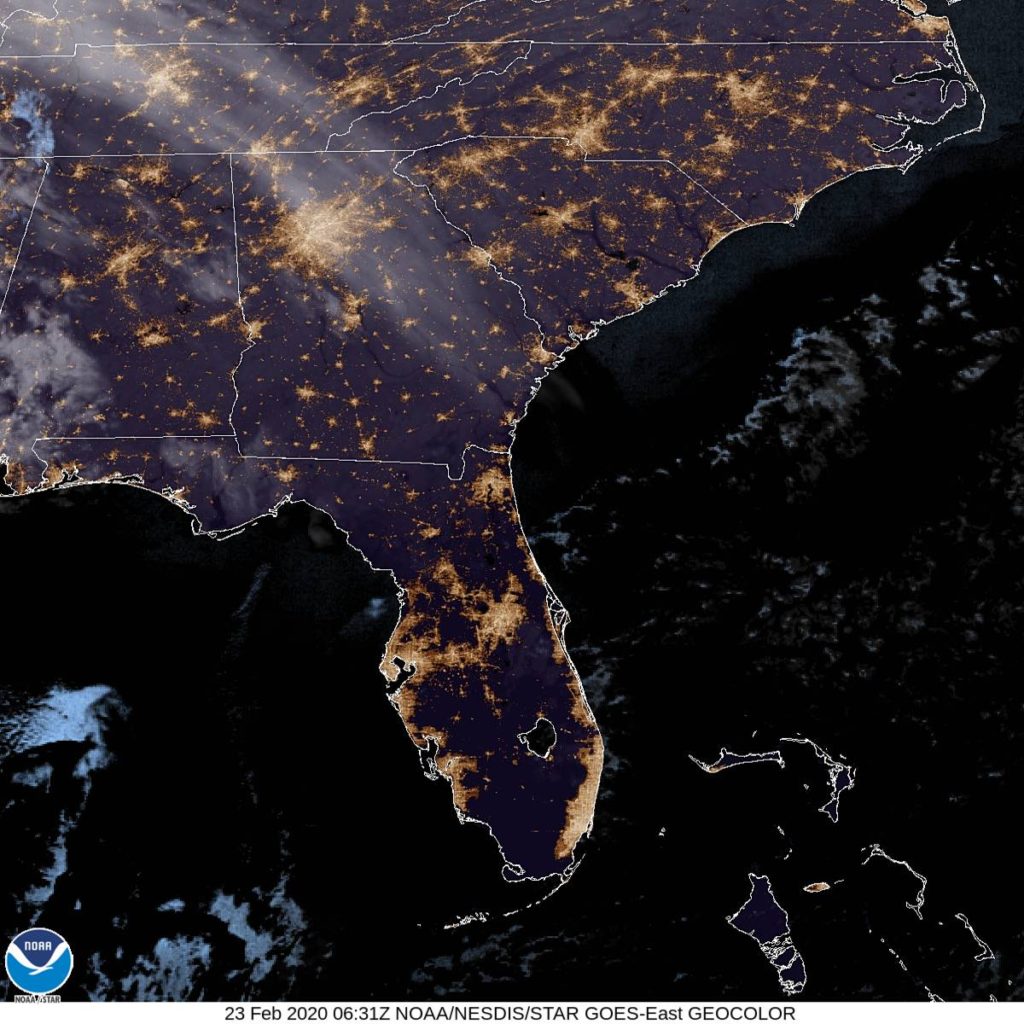
Monday is going to be a rainy day in Columbiam but there sure isn’t any sign of it on satellite.
The end of February heading into March can be some of the most active weather times of the year, and the part of the country that contends with that nastiness is the part of the country we will be forecasting for.
Rochester, New York
Hattieburg, Mississippi Road Trip from Deltona, Florida to Hattiesburg
Killeen, Texas
Road Trip from Killeen to Greensboro, North Carolina
When you think of beachfront communities, I’m not sure Green Bay and Lake Michigan often come to mind. Northeast of Green Bay is Door County, though, which is an idyllic vacation spot. In the summer, though, probably not right now.
At 953AM, CT, Green Bay was reporting clear skies and a temperature of only 7 degrees. Clear dry air prevailed in the Dairy State thanks to the west winds, though some clouds were seen in the Upper Peninsula of Michigan thanks to flow coming off of Lake Superior, which has remained open this winter. Surface high pressure is in control thanks to a broad trough lying along the southern third of the country. Unfortunately, with the jet as far south as it is, warm air is pinned in the Gulf, and the ridge is particularly chilly. A shortwave upper level trough is translating through the Great Lakes as well, functioning similarly to a thermal trough, though mostly because it is left without a source of moisture. Still, as it pivots away from the area, a warm up can be anticipated simply due to the increased sun angle as we approach spring. Tomorrow – Mostly sunny, High 16, Low -4 Friday – Sunny and warmer, High 34, low 6
TWC: Tomorrow – Mainly sunny. High 15, Low -3 Friday – A mainly sunny sky high 33, Low 5
AW: Tomorrow – Very cold with plenty of sunshine High 16, Low -3 Friday – Not as cold with plenty of sun High 33, low 6
NWS: Tomorrow – Sunny, High 16, Low -4 Friday – Sunny, High 32, low 5
WB: Tomorrow – Sunny, High 13, Low -3 Friday – Sunny, High 31, Low 6
WN: Tomorrow – Sunny, High 16, Low -4 Friday – Sunny, High 32, low 5
FIO: Tomorrow – Clear throughout the day. High 16, low -4 Friday – Windy in the afternoon and evening. High 33, Low 4
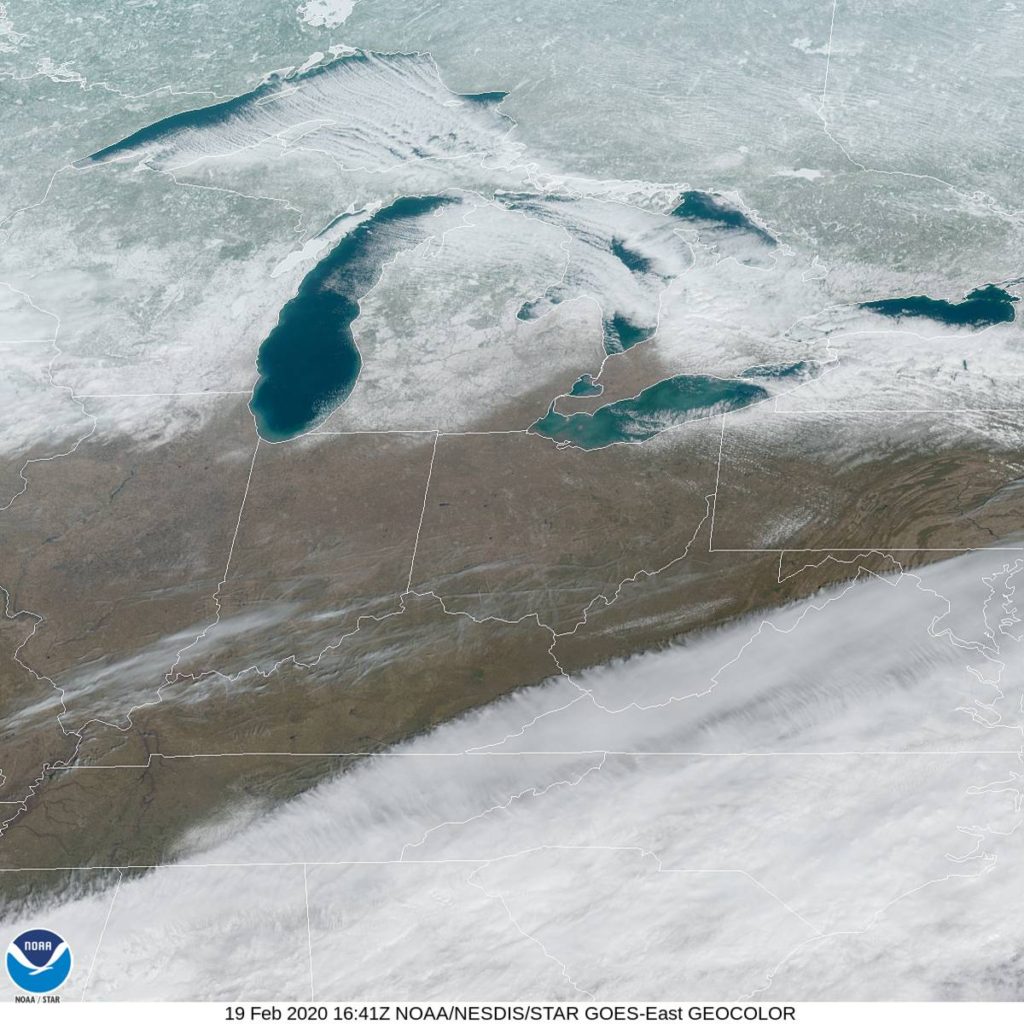
Brr! Ok, this is probably another reason most people don’t think of Green Bay and beaches. here is the satellite imagery. A lot of the white is actually snow on the ground, rather than clouds.
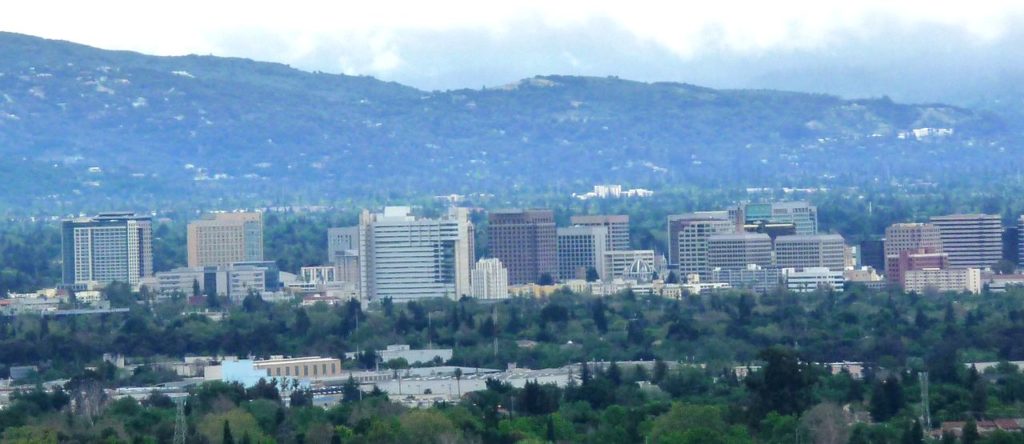
We needed to rely heavily on model guidance for our forecast in San Jose, thanks to tricky terrain and a dearth of information to the west. Some of it is still instinct, however, and many people shouldn’t have trusted theirs. On Monday, skies cleared a bit thanks to a brisk northwest wind, and temperatures popped into the 70s, but that was the only real forecast surprise for model adherents. Victoria-Weather and The Weather Channel collected the top spot, which is interesting, because the robot forecaster actually ended up last. Actuals: Monday – High 71, Low 48 Tuesday – High 69, low 45
If you have been tracking the weather in the southeast over the last several weeks, you know that the we’ve had a bit more early severe weather than last year, particularly in the Dixie Alley of Mississippi, Alabama and states surrounding them.
The issue hasn’t really been the individual severity of these storms, but rather the frequency with which they have been occurring. Big thunderstorms often bring heavy rains, and while the southeast is uniquely equipped to contend with a higher water content than most places in the country, they have simply seen these storms too often.
Presently, the Mississippi is over it’s banks in Natchez, while the Tombigbee River in Alabama from Gainesville to Mobile is at moderate flood levels. The Pearl River, particularly in Jackson, is where the flooding is presently the worst. The Pearl is currently cresting at eight feed above flood stage.
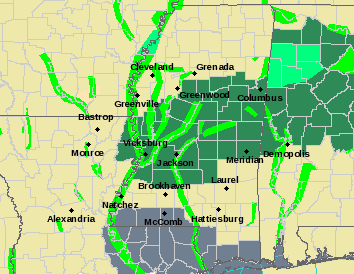
If we were expecting to stay dry for a while, I would confidently say that the worst will soon be over for residents of Jackson and the surrounding environs, however the forecast calls for more rain. Many parts of Mississippi, including Jackson, will see at least a couple more inches of rain through Thursday, leading the WFO in Jackson to pain the region in Flash Flood watches and warnings.
Mississippi’s terrain is porous and will be able to absorb the excess faster than many places, but it is still significant to see flash flooding forecast over such a broad swath of land. The next round of rain and thunderstorms has already popped up south of Grenada.
Do you know what this site has been missing this winter? Posts about snow storms on the East Coast. this isn’t just because of our pared down content schedule either; there just hasn’t been any snow to speak of south of New York, and the biggest features have waited until they are over the Atlantic to really take off.
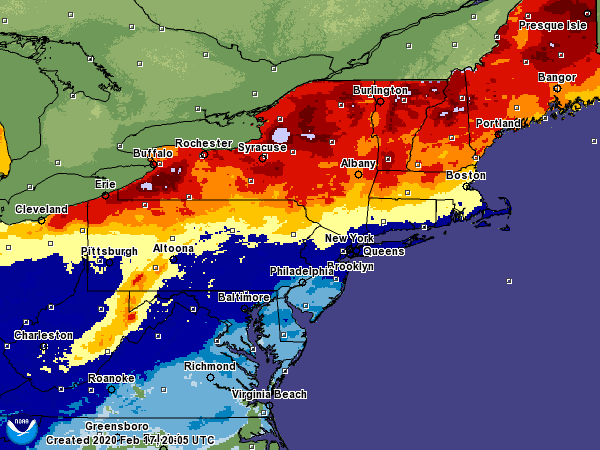
New York hasn’t been particularly snowy either, but Philadelphia and Washington have seen less than an inch of snowfall accumulation all season. Take a look at the accumulated totals for the mid-Atlantic to date this season.
The light blue shadings are the 0-1″ range, which includes southern New Jersey to northern North Carolina, at which point the total accumulations really taper off. Things are light north of there as well, with under half a foot falling from the Cape to southeastern Pennsylvania.
It hasn’t been dry along the East Coast. There have been plenty of warmer core systems that brought enough rain to make sure the soil stays saturated. There have also been cold snaps from time to time. The problem for snow lovers in the Beltway is that those two things haven’t phased.
It’s still only the middle of February, so hope is not all lost for people want to see some snow this season, but for those that aren’t snow aficianados, we are already almost out of the woods for the season, and it has passed with very little headache.
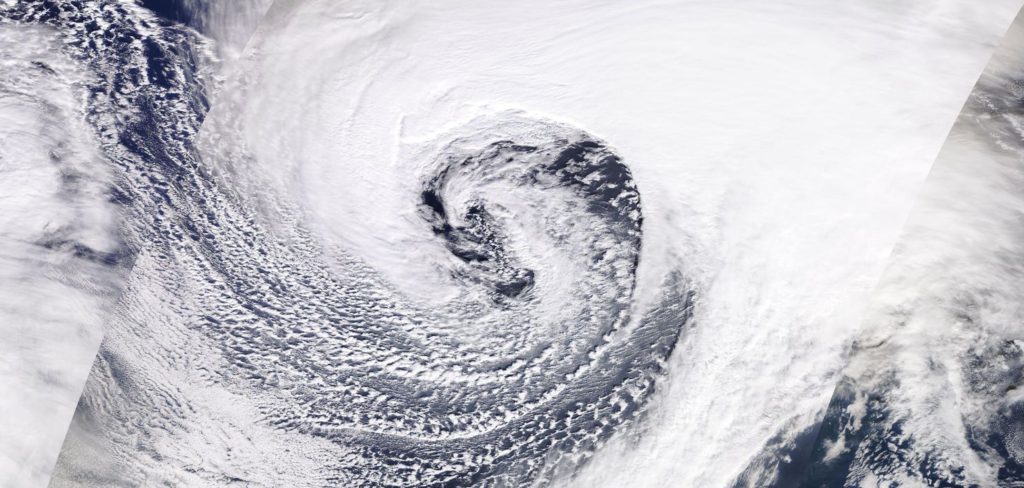
A strong storm with an origin in the southern United States underwent explosive cyclogenesis (a ‘bomb cyclone’) in the North Atlantic over the weekend and slammed into Ireland and the United Kingdom, bringing strong winds, heavy rain and disruption through the region.
Many European meteorological agencies give names to all significant systems. In this case, the United Kingdom, Ireland and the Netherlands form a cooperative that ascribes names to storms, much like the National Hurricane Center does to hurricanes. This is a tried and true method of weather agencies both to document and streamline the notifications of the strongest storms (and a lot of that is lost when networks give their own names to snow storms).
But the politics and naming conventions aside, Dennis was one of the strongest storms to ever move across the north Atlantic, thanks to a strong jet structure that fostered the rapid development. Usually, and once again this was the case, when there is such a rapid development, it is accompanied by very gusty winds.
With Dennis, however, the most significant impact was with the water. Churning seas claimed the lives of a couple of British citizens, while flood waters and heavy rains lead to the death of another man in Wales, and a woman was swept away by floodwaters in Worcestershire. There have also been stories of ships (though abandoned) washing ashore in Ireland thanks to the churning seas, and flooding as far away as Sweden as Dennis made his way towards the Baltic.
The storm has mostly shifted out of Europe, though a cold front remains particularly active in Russia and Belarus, though it tails as far west as France. A few snowflakes will fall in Scotland and northern England today, while runoff will continue to cause rivers to rise on Great Britain for at least another day or so.
To continue to follow Dennis and his lingering impacts, as well as learning more about individual tales and specific happenstances brought about by this massive storm, BBC News continues to have live updates about his wrath.
Just a quick little trek today, as we head about 3 hours from the Central Valley to the Bay Area. Such a change in geography over only 191 miles. We’re going to cover the ground at a pace of 61.9mph. That’s not very fast, but these short trips aren’t known for their high rates of speed. Nor are California roads.
Visalia, California
Fortunately for our quick drive on Monday morning, the pattern, already pretty good, is going to get even better on the West Coast. A ridge is setting up over California, which may lead to a bit of a breeze, but not much else. The big concern will be traffic, but we’ll get to San Jose around lunch time, so hopefully, it won’t be bad!