Our forecast for Casper seemed simple enough. A town with the same name as a famous ghost right before Halloween, and high pressure firmly in place. Of course, it’s never that simple. Casper has nothing to do with the ghost, and is in the mountains, so even high pressure can lead to some tricky conditions! Winds were howling throughout the forecast period, which helped the daily delta in temperature grow beyond what most forecast outlets expected. Low temperatures even dipped below freezing on Monday! I’m not ready for that. The Weather Channel settled in with a comfortable victory. Actuals: Sunday – High 68, Low 46 Monday – High 70, Low 30
There are many Springfields in the United States, and I very strongly believe that this is one of them.
At 752PM, CT, Springfield was reporting clear skies and a temperature of 57 degrees. Clear skies and a low dew point suggest temperatures will be pretty chilly tomorrow morning. High pressure has settled into the eastern part of the country, stymied from eastward progress by Subtropical Storm Josephine. The high pressure is not going to move over the next couple of days, and sunny skies will continue unabated. To the west, low pressure presently over the Desert Southwest is going to start charging northeastward, bringing with it warmer air and a bit more humidity. Expect an end of the week that feels closer to summer than winter. Tomorrow – Sunny, High 76, Low 47 Friday – Sunshine continues, High 77, Low 44
TWC: Tomorrow – Sunny. Warm. High 78, Low 45 Friday – Mainly sunny. Warm. High 76, Low 46
AW: Tomorrow – Mostly sunny and warm; a nice day for outdoor activities, High 77, Low 44 Friday – Mostly sunny, nice and warm; great day to be outside High 75, Low 47
NWS: Tomorrow – Sunny, High 77, Low 48 Friday – Sunny, High 76, Low 49
WB: Tomorrow – Sunny. High 76, Low 49 Friday – Sunny. High 71, Low 49
WN: Tomorrow – Sunny, High 77, Low 48 Friday – Mostly sunny, High 76, Low 49
CLI: Tomorrow – Sunny, High 74, Low 45 Friday – Sunny, High 74, Low 46
I am not sure that it won’t be warmer on Friday than Thursday. Enough guidance disagrees that I am only putting an extra degree on the high Friday.
The Florida Panhandle, many people will tell you, is more reminiscent of the deep south than of the touristy peninsula most of us have visited before. That extends to the heat and humidity of summer, and temperatures in the winter that are surprisingly cool at times. Tallahassee does have seasons, and autumn showed up during our forecast last weekend. Temperatures dropped from the upper 80s on Friday to the mid 70s for highs after a dry but clearly strong cold front swept through. That’s sweater weather for Floridians. It was also a W for Accuweather. Actuals: Friday – High 88, Low 62 Saturday – High 76, Low 60
One of the after action reports I saw after Isaias made landfall was that Google’s AI based weather model performed better than most of the traditional numerical models that scientists use. After a moment of reflection on this news, I had one reaction.
Duh.
Discussions of AI are everywhere and are sure to enflame emotions the more you think about it. So let’s talk about what AI is, or at least what it comes from: advances in computer hardware, which in turn leads to faster computing. From a societal or economic standpoint, I’m not an expert on what that would mean. From a meteorology perspective, though, it’s a boon.
Numerical models have existed as long as meteorology has been around. They weren’t particularly useful until computers reduced the time it took to compute the equations that were plugged into the model. The first models were calculated by hand and took 6 weeks to put together. They were more diagnostic than prognostic.
Models have continued to get better and better as computing has gotten better and better. It makes logical sense that the Google AI model, using the best computing software available, should be even better. There are a few caveats to that, however.
First, meteorology will forever be held back by A) a lack of available observations. There simply aren’t enough observations at the surface and certainly not enough aloft to perfectly encompass the atmosphere and calculate it successfully. Even if we did, B) there aren’t enough known equations to solve for all the variables that go into a forecast. There will always be a bit of mystery.
Caveat number two, is that Google AI wasn’t the only one to accurately forecast a more eastward track than most other outlets indicated. For example, there was me. I’m not trying to brag (yes, I am) I am just trying to note that there will always be room for common sense assessments of the weather. There always needs to be someone to communicate, especially in dangerous situations, or situations that aren’t as dangerous as the unfamiliar might believe.
Having the ability to run many more calculations in a much faster time is the essence of building better weather model. I’m an AI skeptic about a lot of things, however meteorology is a perfect use case for it. The ability to run more equations in a shorter time will allow for better model resolution, which in turn can mean better forecasts and increased safety. The compute power of AI is a positive development.
I’m still not getting in a self driving car, though.
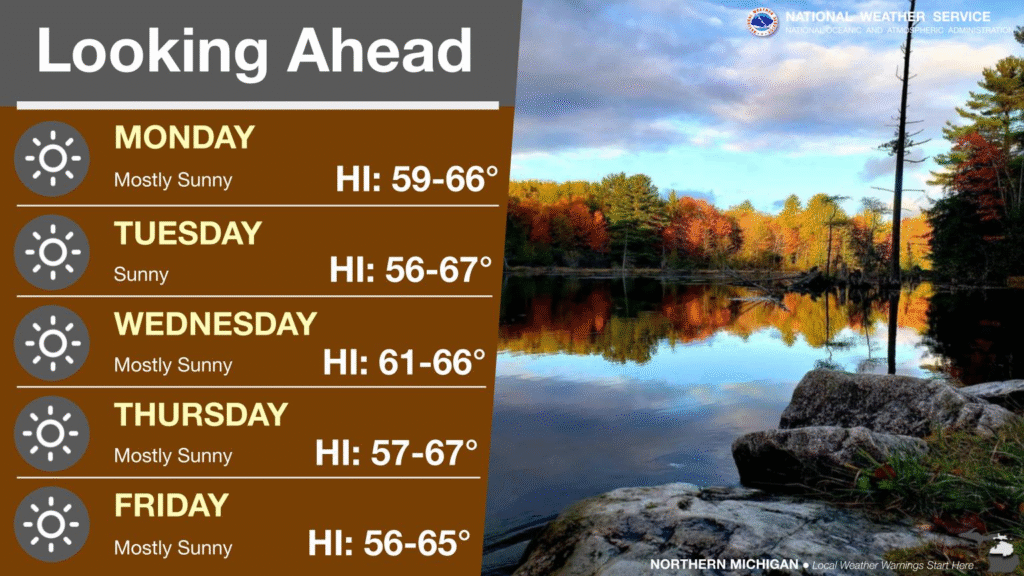
1:50PM: These are all suns, northern Michigan, not little snowflakes
4:49PM The wave of chilly air is getting pushed out of the country with a ridge building back into the center of the country. One last night of frost and freeze advisories, this time centered in Ohio and the surrounding areas. It’ll be warmer for a bit after that.
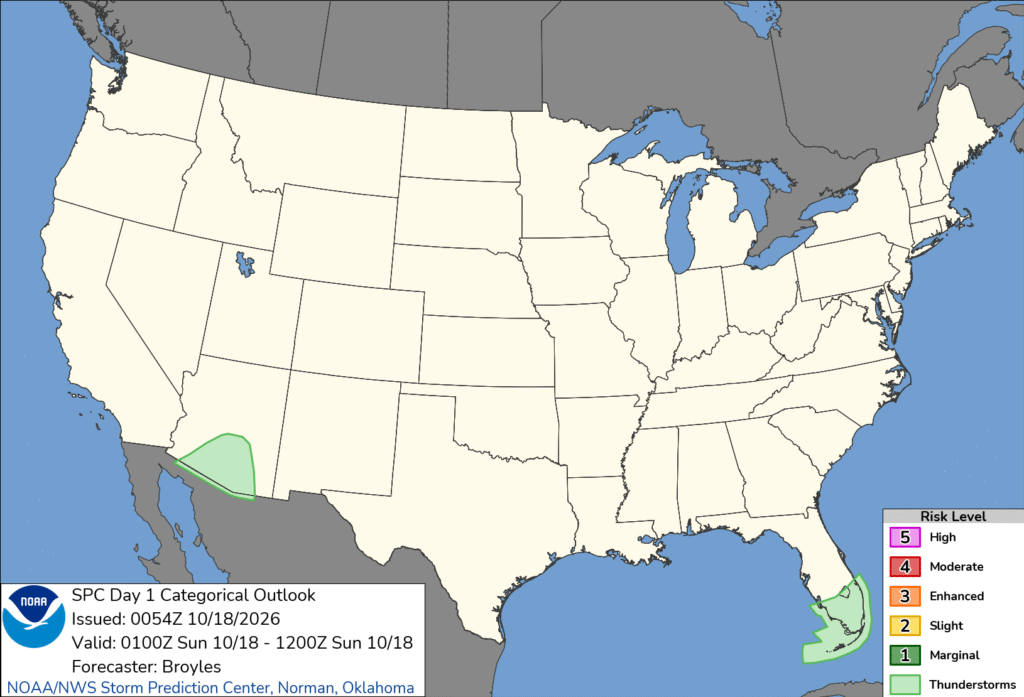
9:40PM It’s very quiet night across the country tonight. There is a churning area of low pressure in the Atlantic, but it looks meaner than it is. It’s going to hang out approximately where its currently at for the next couple of days, effectively keeping the east coast dry, as moisture cycles back into the low.
Casper is the 2nd largest town in the state of Wyoming. You may not be impressed by that, but it would be the largest town in Vermont!
At 853PM, MT, Casper was reporting a temperature of 59 degrees with clear skies. The clear skies would typically mean an overnight cooldown, however the winds were brisk and from the south, which should temper any radiative heat loss. The winds were gusting over 30mph. Low pressure in the Canadian Rockies is the culprit for the brisk winds and warm temperatures. The trough to the north will pass to the east, with a surface area of high pressure and more stable conditions arriving by Monday morning, with rain staying entirely out of the forecast. Tomorrow – Mostly sunny, High 67, Low 47 Monday – Sunny, High 67, Low 36
TWC: Tomorrow – Sunshine and some clouds. High 68, Low 46 Monday – Sunny. High 69, Low 36
AW: Tomorrow – Partly sunny and pleasant High 67, Low 40 Monday – Plenty of sunshine High 70, Low 36
NWS: Tomorrow – Sunny, High 64, Low 44 Monday – Sunny High 66, Low 37
WB: Tomorrow – Mostly sunny. High 61, Low 44 Monday – Mostly sunny. High 66, Low 40
WN: Tomorrow – Mostly sunny, High 64, Low 43 Monday -Mostly sunny, High 66, Low 36
CLI: Tomorrow – Mostly cloudy, High 64, Low 40 Monday – Sunny, High 68, Low 35
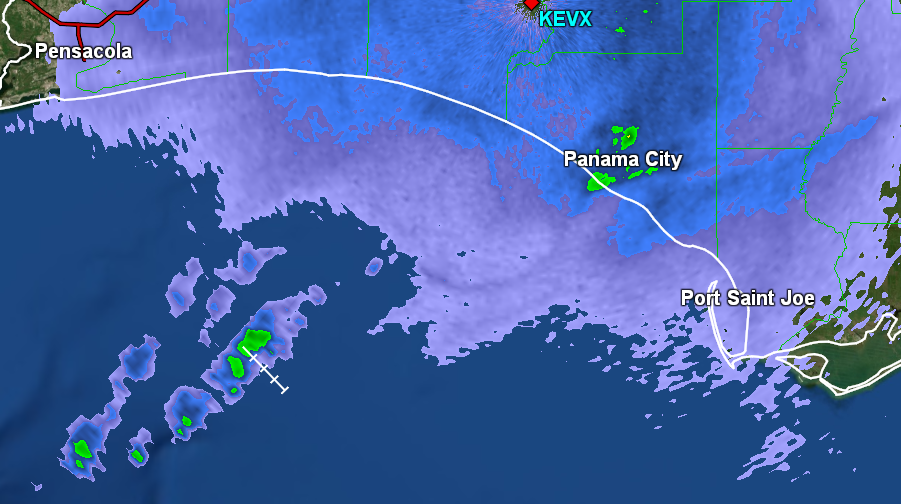
11:24PM: The coming cold front for Tallahassee is indeed producing a band of showers off the coast of Destin into the Gulf, but nothing on shore. Victoria-Weather had rain in the forecast, but it’s looking to stay offshore. Good news, Tallahassee!
11:58PM: Maaaaaybe a little something in Panama City, now?
Tallahassee is in the process of recovering from Isaias, which brought torrential rains just to the west of the state capital.
At 853PM, ET, Tallahassee was reporting a temperature of 74 degrees with clear skies. An area of high pressure lay over the Florida Peninsula, but a deep digging autumnal trough over the Mississippi Valley is going to start churning up some southerly flow across the Gulf. The boundary associated with the trough will arrive overnight Friday into Saturday morning. Far removed from the circulation of the surface flow, and coming after daylight, it will not bring much if any precipitation with it, but it will bring a taste of much cooler air to the Florida Panhandle to kick off the weekend. Tomorrow – Mostly sunny, clouds late, High 89, Low 65 Saturday – Clouds early, with some predawn drizzle, High 73, Low 54
TWC: Tomorrow – Except for a few afternoon clouds, mainly sunny. Hot. High 89, Low 64 Saturday – Partly cloudy skies. Much cooler. High 74, Low 59
AW: Tomorrow – Warm with plenty of sunshine High 88, Low 60 Saturday – Breezy in the morning; otherwise, less humid with plenty of sunshine High 75, Low 60
NWS: Tomorrow – Areas of fog before 10am. Otherwise, sunny High 89, Low 66 Saturday – Sunny, High 73, Low 60
WB: Tomorrow – Areas of fog in the morning. Sunny. High 87, Low 67 Saturday – Sunny. Much cooler. High 74, Low 61
WN: Tomorrow – Mostly sunny, High 89, Low 66 Saturday – Mostly sunny, High 74, Low 62
CLI: Tomorrow – Sunny, High 89, Low 64 Saturday – Sunny, High 74, Low 58
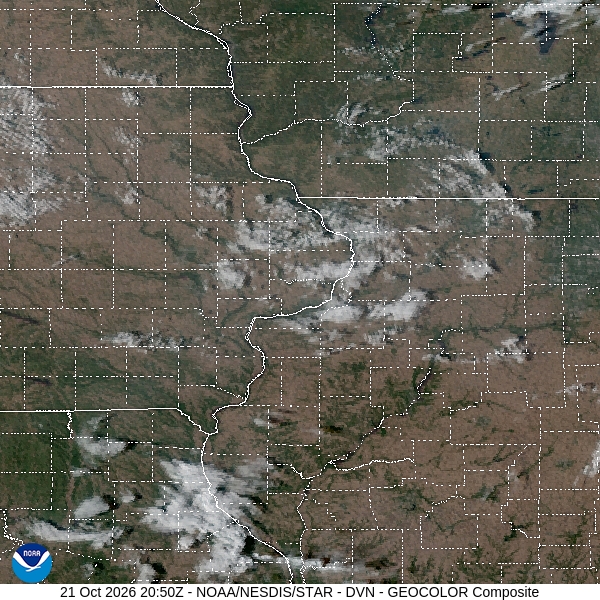
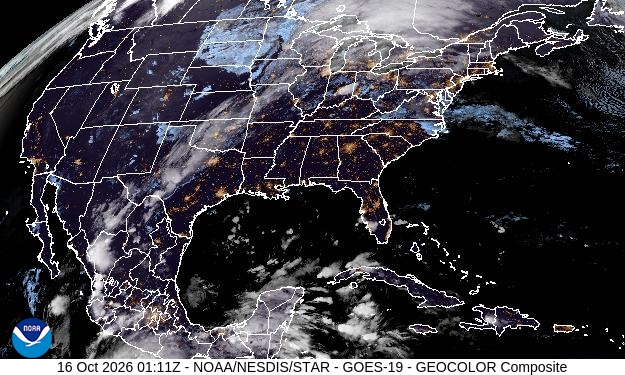
I’m the only one who has rain in the forecast, but we all see a big change coming to the weather in Tallahassee. You can see the band of clouds through the center of the country, separating winter and summer.
Our forecast in Allentown oversaw clearing skies and a warmup, with high temperatures from Sunday the 4th climbing 7 degrees to Monday’s high. This coincided with more sunshine, and evacuation of the light showers they had in town. There was one consistency, however, in that The Weather Channel continued their hold on forecasting supremacy that guided them through September. Actuals: Sunday October 4th, .01 inches of rain, High 61, Low 54 Monday, October 5th, High 68, Low 50