last week, we looked at a forecast in Yuba City, north of Sacramento. Whenever I think of interior northern California, I think of mountains, trees and milder weather than the inferno to the south. It gets plenty hot in the northern Valley too, though. Yuba City hit 102 on Wednesday, but faced a significant cool down on Thursday. 93! In fact, that 93 was cooler than any outlet had in the forecast. what a relief, right? Weatherbug beat the heat and had a very good score to earn the win. Actuals: Wednesday – High 102, Low 70 Thursday – High 93, Low 64
I recently wrote about the challenge of presenting weather dangers in a clearer manner, and how important it was to clarify the risk represented by much of our sometimes vague terminology.
Another problem is that most consumers receive their weather from the media, and the media does indeed to need to drive viewership. I am of the opinion that people who are watching the news are already in it for the weather forecast, as it will help guide their decisions for the day, but some corporate overseers see it differently.
Meteorologist Joe Crain was recently terminated for espousing the opinion found in the above video. His station’s corporate management insisted upon a certain number of “Code Red” weather days with no real threshold for what that meant. Obviously, that runs counter to the efforts of increasing weather awareness for the every day person.
Overwarning, or in this case overpromoting severe weather is akin to crying wolf. If a Code Red day can mean rain for three or four days, how can the viewer know that Code Red means severe thunderstorms or tornadoes on another day?
But alas, the bottom line is financial, especially when a national corporation owns a local TV station, rather than public safety. While Crain was in the right by most clear thinking opinions, he definitely ran afoul of his employers’ business plan. It’s a blight for all meteorologists.
We are going to sneak on over to the home of the college World Series. This is the rare example of a previously assigned forecast working out with a big event in that town. The blog has only been around for a decade, sheesh.
At 952PM, CT, Omaha was reporting a temperature of 7 degrees with fair skies. Clouds associated with strong showers and thunderstorms have pulled into east Iowa, and Nebraska was nearly entirely devoid of clouds. A cold front swinging out of Canada intersected with weak low pressure in Iowa, and the localized circulation was doing an effective job of drawing clear, dry air into the Missouri Valley. Father’s Day looks quite pleasant for Omaha as a result. A surface trough scooting through the Dakotas may touch off some showers in the north central part of the state, however the still lingering Canadian front will prevent moisture from really accessing the trough. Clouds will increase in the evening, but Monday doesn’t look terrible either. Tomorrow – Mostly sunny, High 83, Low 63 Monday – Increasing clouds, High 80, Low 62
TWC: Tomorrow – A few clouds from time to time High 88, Low 65 Monday – Some sun in the morning with increasing clouds during the afternoon. A stray shower or thunderstorm is possible. High 83, Low 64
AW: Tomorrow – Times of clouds and sun; nice High 85, Low 65 Monday – Times of clouds and sun; nice High 80, Low 64
NWS: Tomorrow – Sunny, high 83, Low 63 Monday – A 20 percent chance of showers and thunderstorms after 2pm. Partly sunny, high 80, Low 61
WB: Tomorrow – Sunny, High 84, Low 65 Monday – Partly sunny with a 30 percent chance of showers and thunderstorms, High 80, Low 65
WN: Tomorrow – Mostly sunny, High 84, Low 63 Monday – Parly cloudy with isolated storms, High 81, Low 61
FIO: Tomorrow – Partly cloudy throughout the day. High 83, Low 65 Monday – Mostly cloudy throughout the day. High 79, Low 59
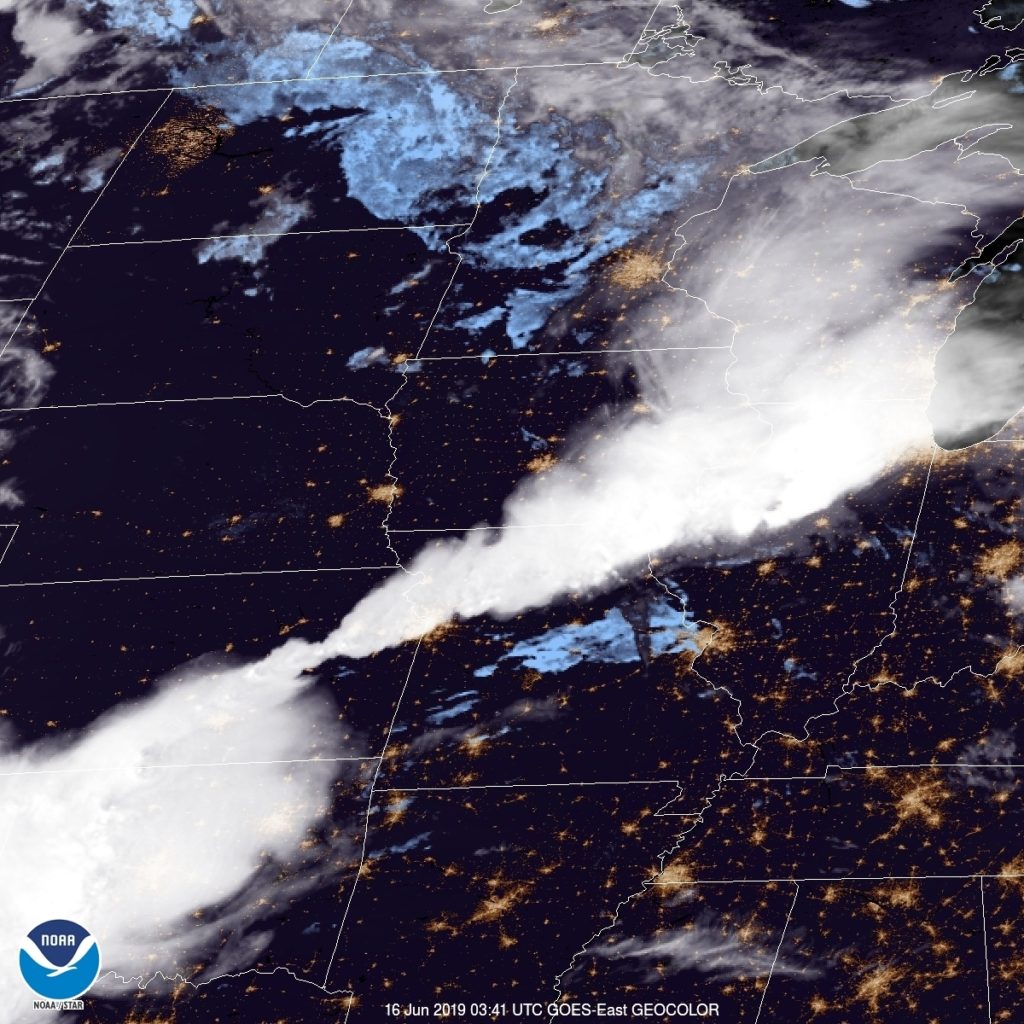
Here is the very pretty satellite for Omaha, which is missing any clouds over eastern Nebraska.
All right! It’s finally time to get a forecast under our belt this month. We’ll do so with a trip to northern California, where last summer the concern was wind and wild fires. It’s been much wetter this year, so let’s hope the fire danger is mitigated.
At 758AM, PT, Yuba City was already reporting 79 degrees under fair skies. High pressure dominated the west coast, and it promised to be a hot day in the central Valley. An excessive heat advisory was already in place. There is a weak undercutting wave moving through the north Pacific that will arrive tomorrow, and may bring some high clouds and perhaps a dose of cooler weather on Thursday. The upper ridge will diminish through the period, but the low level thermal ridge isn’t expected to go anywhere, and even if temperatures moderate, it will still be hot. Tomorrow – Fair, High 100, Low 67 Thursday – mostly sunny, High 95, Low 64
TWC: Tomorrow – A few passing clouds, otherwise generally sunny. Hot. High 103, Low 68 Thursday – Mostly sunny skies High 97. Low 64
AW: Tomorrow – Mostly sunny; hot; extreme heat can be dangerous for outdoor activities High 102, Low 68 Thursday – Sunny; hot; air quality will be unhealthy for sensitive groups High 95, Low 64
NWS: Tomorrow – Sunny and hot, High 101, Low 70 Thursday – Sunny and hot High 97, Low 67
WB: Tomorrow – Mostly sunny, High 101, Low 70 Thursday – Sunny, High 94, Low 64
WN: Tomorrow – Mostly sunny, High 101, Low 70 Thursday – Sunny, high 97, Low 67
FIO: Partly cloudy until afternoon. High 98, Low 71 Thursday – Clear throughout the day. High 94, low 65
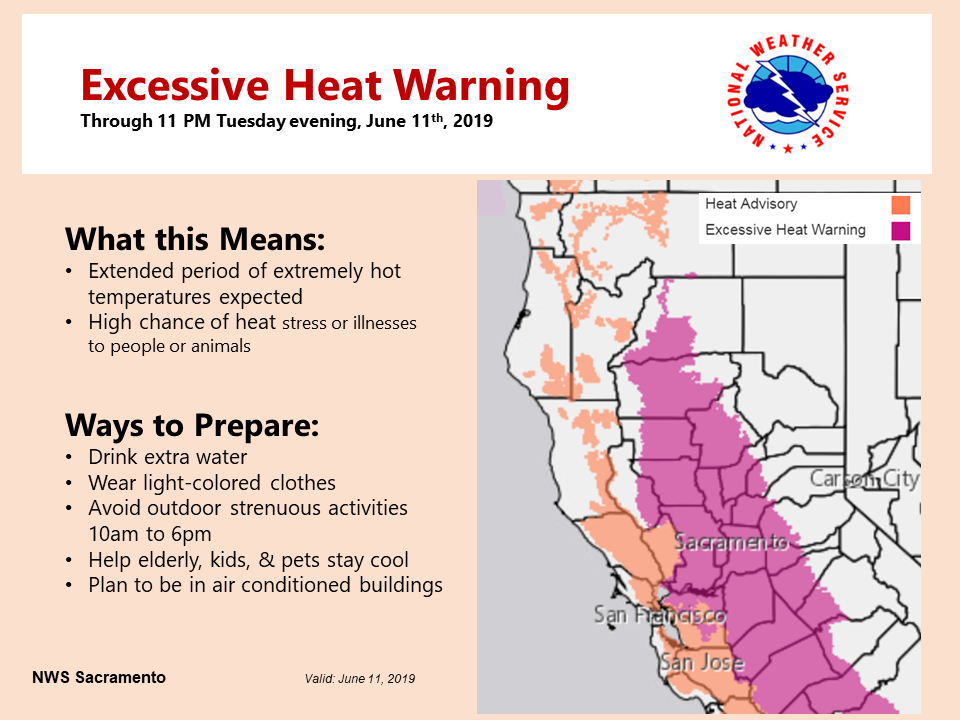
Hot! Here is a look at the heat warnings, geographically, across northern California right now.
Did you see the wall of dust as it charged toward #Lubbock and @TexasTech today? The dust was picked up by strong outflow from a cluster of severe thunderstorms as they moved toward the city. #TxWxpic.twitter.com/pUHpoXgLX9
This massive, sprawling dust storms are more frequently associated with the sandy deserts of the Middle East, or more locally, the dusty landscapes of the Southwest, but this massive haboob swept into Lubbock, Texas late last week, and was captured by Texas Tech University for all of us to marvel at.
As the Red Raiders noted, the haboob is formed, as they often are, but winds rushing away from thunderstorms, thanks to downdrafts hitting the earth and spreading outward, faster than the storm motion itself. This is a feature that often appears in the desert where the climate is arid and the ground can get dusty, but where instability can be such that strong, but low precipitation thunderstorms can develop. Usually, there is more moisture available than this in West Texas, but on this occasion, we get quite the show.
There are so many layers of terminology in meteorology and weather forecasting on top of the scientific definitions of various phenomenon that it’s no wonder there is so much confusion when dangerous weather looms. Part of the problem is a fundamental lack one’s own geography, but also a lot of these terms we use in alarm as meteorology, we take for granted that the general public understands.
The problem is that more often than not, the public does not understand. There are a lot of terms, there are a lot of different levels of concern and there is generally a lot of confusion. One of the disconnects is that meteorologists are immersed in the terminology at all times, whereas the lay person only worries about, say, thunderstorm watches a handful of times a year. I’ve seen too many meteorologists get exasperated with the public, but the truth is, there is culpability on our side as well.
I would invite you all to explore my book, coming out on June 18th, for some definitions on watches and warnings. The short version is that warnings are more immediate, while watches are more precautionary. This section begins on Page 108, if you are so interested.
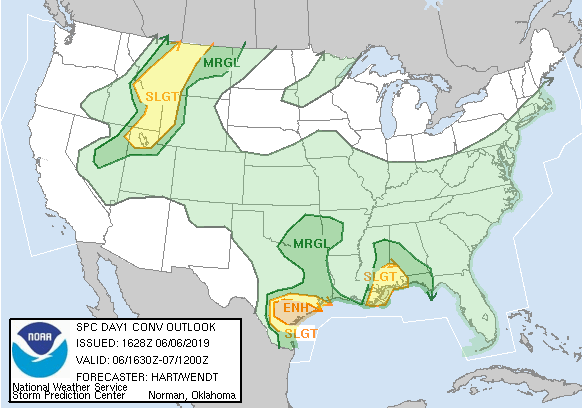
The Storm Prediction Center is truly our first alert for impending severe weather. Still, their terminology can run afoul of the laypersons intuition. Take a look at the current Day 1 (aka – today) forecast for thunderstorms across the US.
If you are a regular reader of this blog, you might know that a “Slight Risk” (SLGT) suggests a potentially stormy day, while an “Enhanced Risk” (ENH) portends a bit more intensity, but if you aren’t familiar with these definitions, a “slight risk” may seem dismissable, while an “enhanced risk” sounds apocalyptic.
Generally speaking, the outlooks are based on the potential for severe weather to occur within 25 miles of a location. The threshold for severe wind and hail is a 15% chance to be referred to as a “slight risk” which means that roughly, you can expect a severe weather event once every 6 or 7 times a slight risk is issued in your area. Tornadoes have a lower threshold, of 5%, or one in every 20 issuances, to have a slight risk be issued for an area. This is the case today in southern Mississippi and eastern Louisiana.
when a “Moderate” or “High” risk is issued, this should be an advanced notice of a significant severe weather outbreak expected for the day. Usually, this terminology is broadcast by the media. For further information, a visit to the SPC website will give a breakdown of the individual threats. and will even label areas under the threat (10% or higher) of significantly severe weather, by use of hatching in their graphics.
It kills us as meteorologists to hear that there was “no warning” when a catastrophic storm moves through an area, because in our minds, there are often at least three layers of notification before a storm arrives. We must accept the fact that the messaging is not as crystalline for the lay person as it is for us, and attempt to deliver out alerts more clearly. for the time being, I hope that this helps to clarify some of the terminology that exists today.
Between a move and a long vacation, Victoria-Weather wasn’t very active, so as much as I like to laud active months for their clarity in selecting a forecaster, I think luck had more to do with the result than usual. The win was split by The Weather Channel and Accuweather all the same.
This is a drive I can get behind. It will be a 4 day drive along the southern tier of the US. The drive will cover 2331 miles, and we will cover ground at approximately 68.5mph, which is a decent clip. That decent clip also means a robust 548 miles traveled on days 1-3, with a long day in the southeast on day 4. they drive fast in Florida, so I bet we save some time.
El Centro, California
DAY ONE (Saturday) For a drive in the southwest, our route will take us through a couple of pretty large areas, as we will encounter the sweltering Phoenix and moderately cooler Tucson on our way to New Mexico. Precipitation is not expected, and population will be minimal between the towns in question. The terrain in central New Mexico may aid in the development of a few showers and storms, but I think those will all remain east of where we will stop, exit 116 between Akela and Las Cruces.
DAY TWO (Sunday) The dry line and the monsoon will be the two most identifiable features on our route on Sunday, but the late in the day develoment of these two features, and the lack of moisture available to them because of a batch of energy in the northeast means we will thread this needle without much threat for precipitation. We’ll make it to Kerrville, on the outskirts of San Antonio to finish the day.
DAY THREE (Monday) The tail of a cold front will wrap around an advancing bubble of high pressure on Monday, and will touch off a few squirts of rain and isolated thunderstorms along the Texas/Louisiana border as we approach. It looks the wettest on the Louisiana side of the line, and the last couple of hours to Denham Springs, just east of Baton Rouge, bring a chance of a wet windshield.
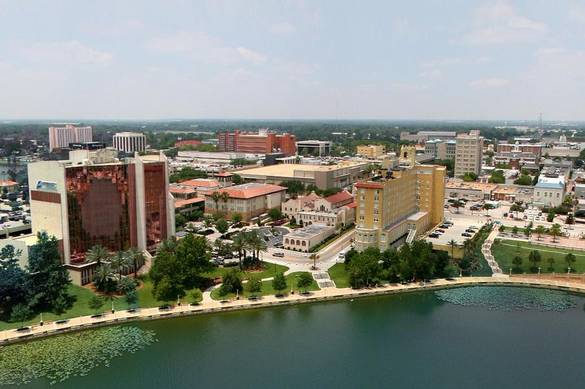
DAY FOUR (Tuesday) This isn’t something we see very often, especially this time of year, but high pressure is expected to settle into the southeastern US by early next week. Hot? Yes. Dry? Also yes, even in Lakeland. There might be a stray spritz left over in Denham Springs, but it should be good weather to enjoy the lakes of central Florida.
This has been a challenging week. Tornadoes have now struck in several places, most famously in Jefferson City, Missouri and Dayton, Ohio. This 5 day trek, covering 2,585 miles will cover nearly all of the regions that were most heavily impacted. We’ll parcel this day into 530 mile segments, with a pace of 66mph. I thought it would be quicker given the surfeit of interstate we will cover, but safety first. hopefully the tornado threat is lessening as we traverse the central Plains.
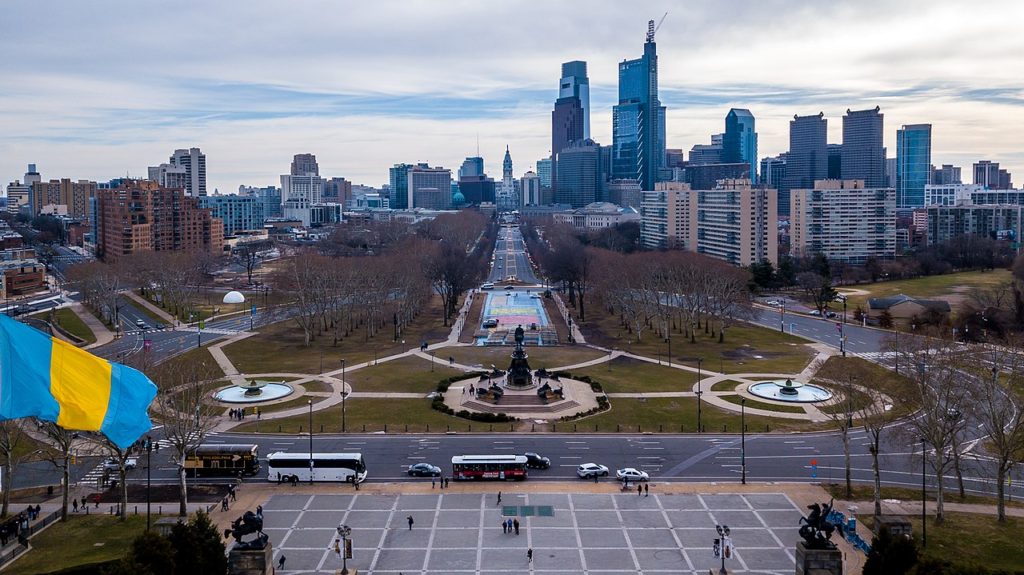
Philadelphia, Pennsylvania
DAY ONE (Thursday) Eastern Pennsylvania hasn’t been safe from the tornadoes either, with a twister northeast of Philadelphia last night. There is severe weather in the offing again today, however by tomorrow, when we start on our way westward, the system will finally be abating a bit. The rain won’t be any less, unfortunately, as the strong area of low pressure causing all this nastiness will occlude south into the Ohio Valley. Some rain, thunder and maybe another rogue severe (not as widespread!) thunderstorm will be possible through Pennsylvania in the morning. Rain will be heaviest on the western exposures of the Appalachians, but it will be tapering off through eastern Ohio. We should be dry by Columbus, and pleasantly cool in Huber Heights, a suburb of Dayton, though not as heavily damaged by the Memorial Day tornado. It will be our stop on Thursday night.
DAY TWO (Friday) The weather is going to take a dramatic turn for the better on Friday. There might be a rogue thunderstorms, especially in the afternoon across Illinois, because we can’t just leave it well enough alone, but they will be garden variety, pop up storms on the back end of a broad spring cyclone. We’ll make it to Sarcoxie, Missouri in the southwest part of the state on a hot, humid afternoon.
DAY THREE (Saturday) You might think that the drive from southwest Missouri, through Oklahoma and into the Texas Panhandle would bring the best chance for significant severe weather, and with the way things have gone lately, it would seem even more likely that you’d be right. By Saturday, though, the tail of the cold front that has caused so many problems will lie through Kansas, leaving us with some warmer, humid but dry conditions for the day. As the day turns to night, it looks like instability will take over and some terrific lightning producing, if not severe thunderstorms will pick up across the state. Not that this should bother us, we’ll be in the Texas Panhandle, spending the night in Pampa by the time things get going in the Sooner State.
DAY FOUR We will likely see and hear some overnight convection associated with the dry line in the Texas Panhandle overnight, but it will also be associated with cooling aloft. That cooling is going to be gone when the sun rises, and after a short drive to the west, we will be on the dry side of the dry line anyways. The air will be clear in New Mexico, and it’s tough to find a good stopping point in northeast Arizona, but there is a travel center about 15 miles from Chambers that will suit us fine.
DAY FIVE The most significant change we will be the elevation. The Petrified Forest is fairly high up there, and we will descend towards Phoenix, and then cut off towards El Centro. No significant weather is expected, but El Centro is pretty stinkin’ hot.
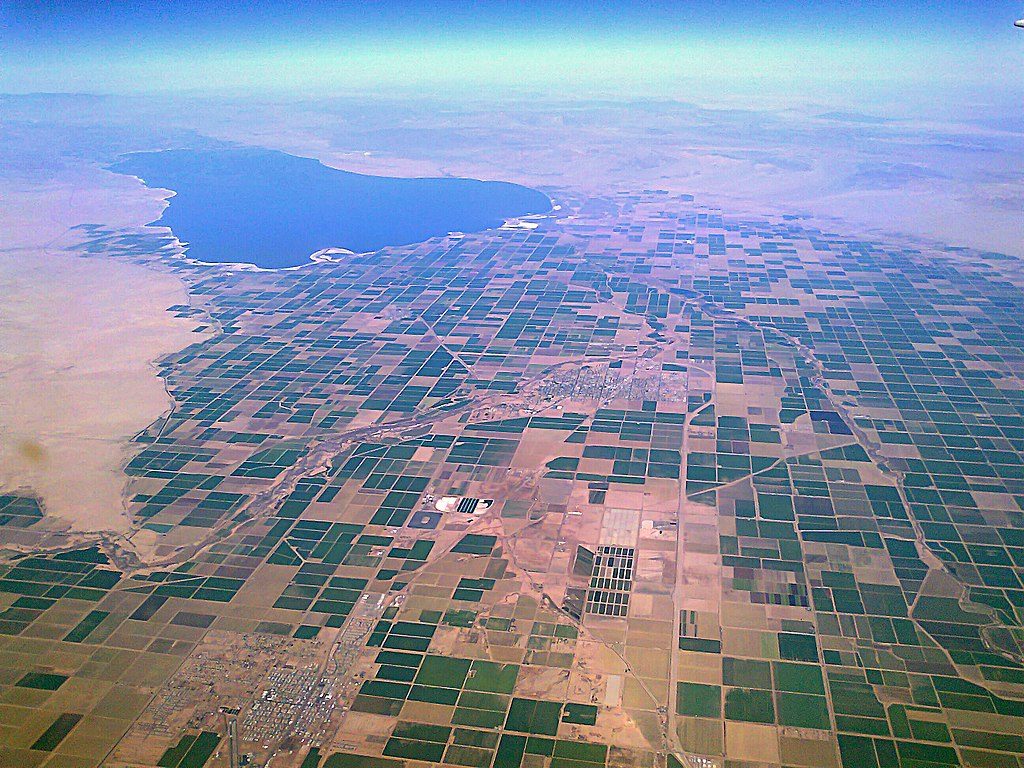
Imperial Valley, with El Centro at the bottom left