San Antonio, Texas

Let’s take a look at the southern part of Texas, where it’s going to be extra hot and extra sticky.

At 751PM, San Antonio was reporting a temperature of 94 with a dew point of 70. Clear skies covered eastern and downstate Texas, though the dry line was active on satellite in the western part of the state. Excessive heat advisories continue through the southern Plains, as high pressure has settled into the area.
The anticyclonic flow is going to dissipate over the next 48 hours, with a return flow setting up along the Sabine River but not any further to the west. San Antonio looks to remain dry if uncomfortably warm to begin the workweek.
Tomorrow – Mostly sunny, High 99, Low 78
Tuesday – Still hot, High 99, Low 79

TWC: Tomorrow – Partly cloudy skies High 99, Low 78
Tuesday – A few clouds from time to time. Continued very hot. High 99, Low 78

AW: Tomorrow – Mostly sunny; very warm High 100, Low 79
Tuesday – Mostly sunny; very warm High 101, Low 78

NWS: Tomorrow – Mostly sunny and hot, High 100, Low 79
Tuesday – Mostly sunny and hot, High 100, Low 78

WB: Tomorrow – Mostly cloudy in the morning, then clearing. High 98, Low 79
Tuesday – Partly cloudy. High 97, Low 78

WN: Tomorrow – Partly cloudy, High 100, Low 79
Tuesday – Partly cloudy, High 100, Low 78

FIO: Tomorrow – Humid and partly cloudy throughout the day. High 98, Low 79
Tuesday – Humid and partly cloudy throughout the day. High 99, Low 78

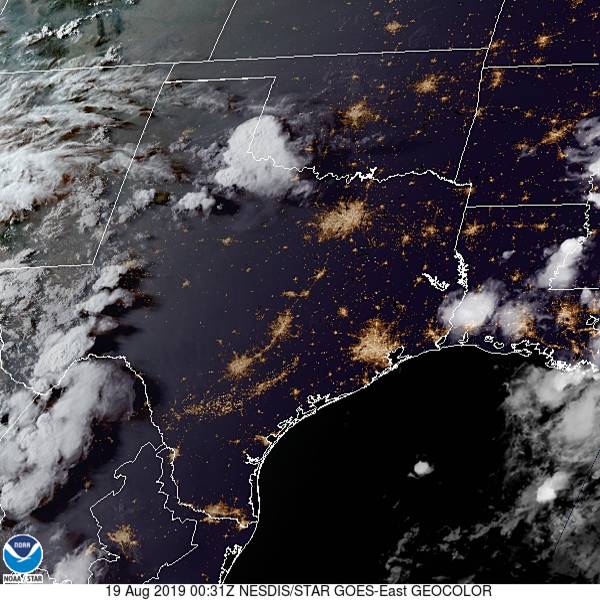
Here is the satellite, with some puffs developing in west Texas.
Colorado sees it’s largest hailstone ever

Last night, massive supercells cropped up in the eastern plains of Colorado. A few tornadoes were reported, though there isn’t much population to really see much of a threat. The hail was more widespread, however, and it was gigantic.

Take a look at the tweeted imge of Colorado’s new largest recorded ahi slone.

The crazy part is that pattern didn’t change much, if at all. Tennis balls fell on the same location the very next night!

Hail stones are caused by strong updrafts, which cause droplets to accrete more and more ice and causes it to become heavier and heavier. The hail stone falls to earth when its weight causes the downward gravitational force to exceed the updraft force. Storms in eastern Colorado have had such intense updrafts so as a half a pound of ice could be suspended. These storms were fueled by the clash of dry air from the west intersecting the heat and humidity in the High Plains.

You can read more about the hail at the Denver Post.

Some good news this summer

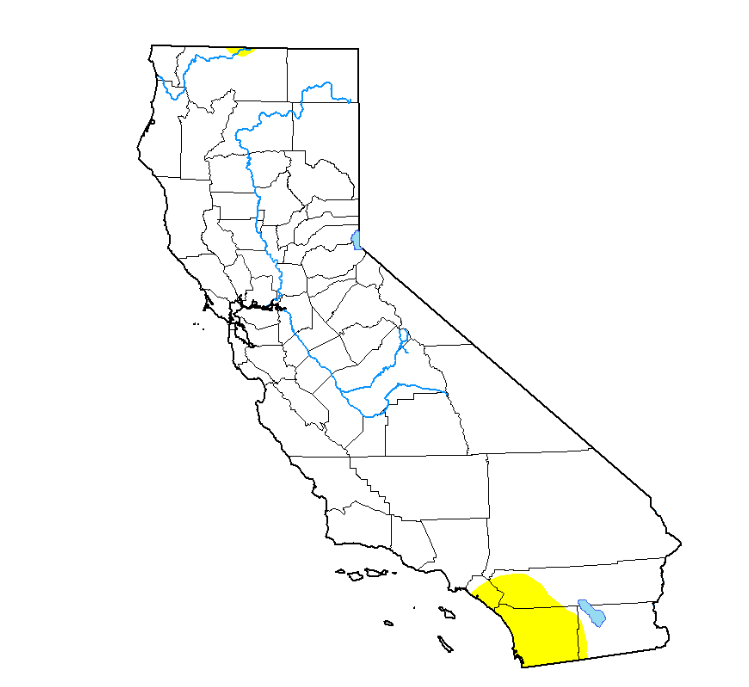
After several consecutive years of drier than normal conditions, and severe drought and water shortages across California, a robust winter and a long spring have nearly reversed the trend, save for a slightly dry patch over the San Diego area.

Additionally, it doesn’t appear as though the drought will return even late this summer. A break is just what all concerned parties need this summer. Hopefully, it will persist next year as well.

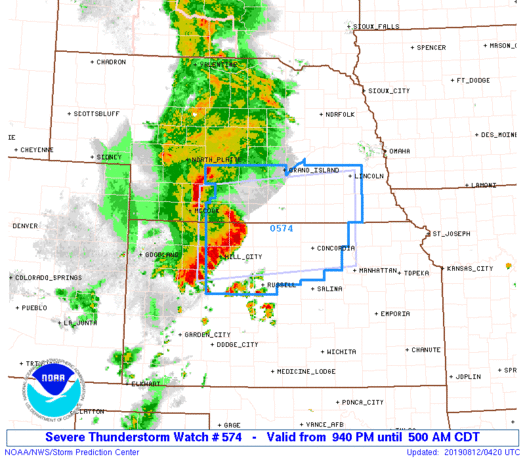
PDS Severe Thunderstorm watch issued for northern Kansas

A watch is issued when a dangerous situation is possible, but a PDS, or “particularly dangerous situation” watch indicates a level of certainty for high end severe weather that should give residents within the bounds of a watch pause. The SPC has issued a PDS Severe thunderstorm watch for Northern Kansas and parts of southern Nebraska, including Lincoln.

Usually, PDS watches are for tornadoes, when supercells are expected to produce large, long lived tornadoes. In the case of this severe watch, that massive line bearing down on Hill City, and ultimately posing a threat for Concordia before dawn, the ongoing threat will be extremely violent straight line winds.

The text of the watch includes a threat for winds of 85mph or greater, while there have already been reports of gusts to 80mph as the squall exited Colorado. This storm is going to rage overnight, which means it will likely take many people off guard. Unlike tornadoes which usually bring sirens, but ultimately pick and choose their way across the countryside, this storm will not trigger warning sirens in every county, despite the risks, and will likely impact more residents. The PDS attribution should make all emergency personnel in the area take notice and be ready to respond as necessary.

It’s going to be a noisy night.

Tropical season is underway in the Pacific

At the time of the GIF The Weather Channel tweeted out, Super Typhoon Lekima was a category 4 storm, doing a quick two-step around Tarama Island southwest of Okinawa. Lekima was one of two typhoons spinning in the region at the time, but fortunately, Lekima was ultimately the only one that made its way to the mainland, striking south of Shanghai.

Krosa ultimately flamed out, but Lekima did lead to 30 deaths, most of which came in a landslide in the populous and hilly Chinese coastal regions. The remnants of the storm are still moving up the coast, and though it no longer maintains the same levels of intensity, the heavy rains are going to continue to bring problems to many communities.

While Lekima was fierce and scarier still when in tandem with Krosa looming on the horizon, we are in a surprisingly calm period, given the time of the year. The Pacific is generally faster to start tropical season than the Atlantic (which remains remarkably dormant) but aside from Lekima and Krosa, there are no other named storms on the planet.

The Eastern Pacific looks next to give rise to another storm, as models seem to hint at something popping up in the next 10 days, but the Eastern Pacific is usually one of the safer places for tropical development, interception with land is rather difficult.

It’s still a month from the peak of the Atlantic season, and the Pacific Season can often come in waves, but through the middle of August, we look to be n a welcome pause this tropical season, especially in eastern China, where recovery is needed.

Coming soon…

We are getting into the late part of summer, and we start to forget about severe weather (major outbreaks, anyways) and start really focusing on the Tropics. With a light forecasting load, we’ll really be able to dig into the potential storm activity around the world, should it arise.

San Antonio, Texas
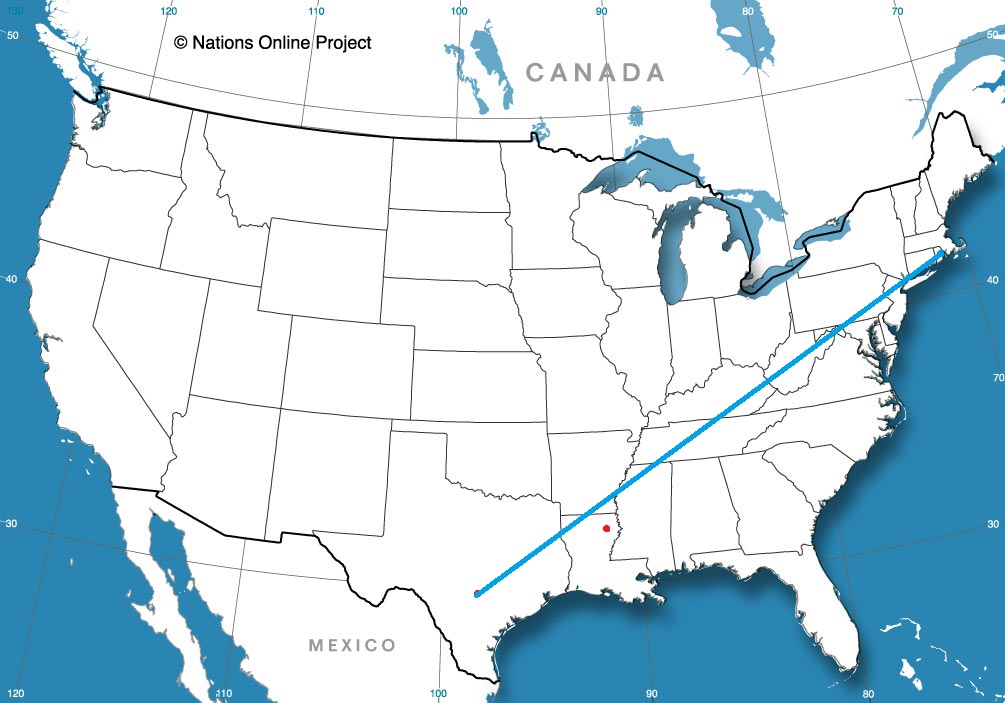
Road Trip from Providence, Rhode Island to San Antonio

Monroe, Louisiana

July Forecaster of the Month

Summer time in the forecasting world can be fairly sporadic, and won and lost on the margins, especially if you don’t take into account the tropical season, which has been, this year, fairly dormant. Those margins, though, can be pretty important, particularly in the energy sector, where temperature forecasting becomes crucial, and every degree matters. It may not seem as important to the lay person, but this win for Accuweather, is just as important as any other month.

OutletMonth wins
Accuweather1.58
WeatherNation1.33
Victoria-Weather1.25
The Weather Channel0.75
Forecast.io0.75
National Weather Service0.33
Weatherbug
OutletMonth winsyear wins
The Weather Channel0.7510.7
Victoria-Weather1.259.95
Weatherbug07.58
Forecast.io0.756.75
Accuweather1.586.61
National Weather Service0.335.78
WeatherNation1.335.61

Rochester’s riches

Thunderstorms generally aren’t as widespread in the northern US as they are in the southeast this time of year, and that is a forecasting lesson I would do well to remember next time. There were storms on Monday in Rochester, just as was universally predicted, but none on Sunday, which only one outlet had left in the forecast. Oops! It was a good forecast all the way around, though, and Rochester was able to enjoy a pretty decent weekend.
Actuals: Sunday, High 83, low 64
Monday – .55″ of rain in thunderstorms, High 85, Low 66

Grade: A-B

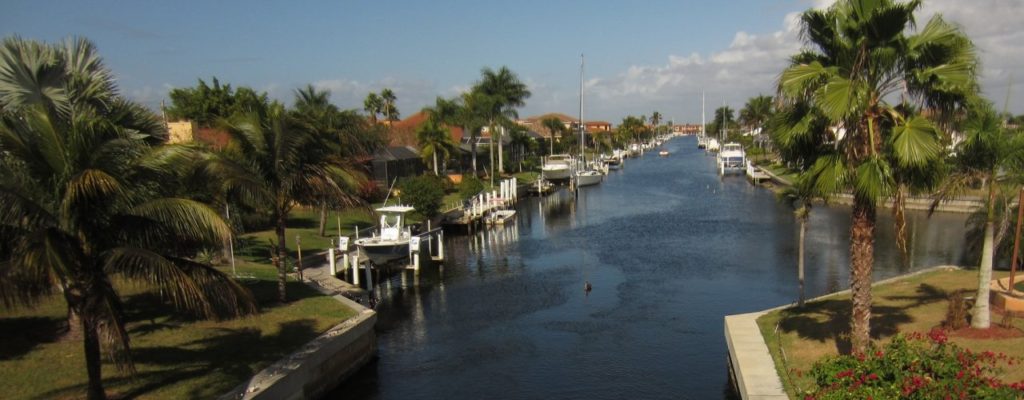
Punta Gorda, Florida to Bridgeport, Connecticut

I know how great vacation can be, but driving to Florida along the East Coast seems like such a challenge. But then, getting to La Guardia from Bridgeport doesn’t seem like a lot of fun either, so a 2 and a half day trip it is! We’ll meander over the course of 2 1/2 days at a pace of 62.6mph, which as you should know by now, isn’t very fast. We will cover barely over 500 miles a day on days one and two, with the rest of our 1284 mile journey reserved for Saturday.

Punta Gorda, Florida

DAY ONE (Thursday)
This is the rare August in which the southeast is somewhat synoptically active. There are a lot of showers and storms in the northeastern Gulf as high pressure sinks into the Carolinas. The daily convection in the southeast will likely not make it further north than Gainesville, which means that if we start early enough, we should stay dry all day. Well, save for the sweat we break out into every time we stop for gas. It’s still going to be hot and humid, until we reach Gable, South Carolina, southeast of Sumter. This blog is very into Sumter right now.

DAY TWO (Friday)
High pressure won’t last long in the face of August heat and humidity in the southeast. Alas, a blob of moisture will waft north into Georgia and the Carolinas. We should be sneaking into Virginia by the time it really gets active, but with the moisture wrapping into the eastern exposures of the Shenandoahs and Blue Ridge, don’t be surprised to see some late afternoon haze and clouds, even as far north as Havre du Grace, Maryland, at the northern end of Chesapeake Bay, and our terminus for the day.

DAY THREE (Saturday)
Further north, high pressure often has a greater toehold, and that will be the case on Saturday. A wedge of dry air associated with low pressure in Canada will make itself at home in between the moisture blob to the south and that same area of low pressure. It’s going to be a bit of an intense day of driving, as we pass through the southern and eastern parts of the Philadelphia metro, and then right through the heart of New York, but it should be worth it, as Bridgeport is in for a fantastic start to the weekend.

Bridgeport, Connecticut

Popocatello

Popocatepetl is a volcano in Mexico. Pocatello was a white hot city in Idaho last week. Popocatello is a portmanteau by a meteorologist who thinks he is funny. Victoria-Weather thought it would be even warmer in Pocatello as July faded to it’s conclusion than it actually was, but we still managed to collect a much needed victory.
Actuals: Tuesday – High 93, Low 55
Wednesday – High 93, Low 54

Grade C