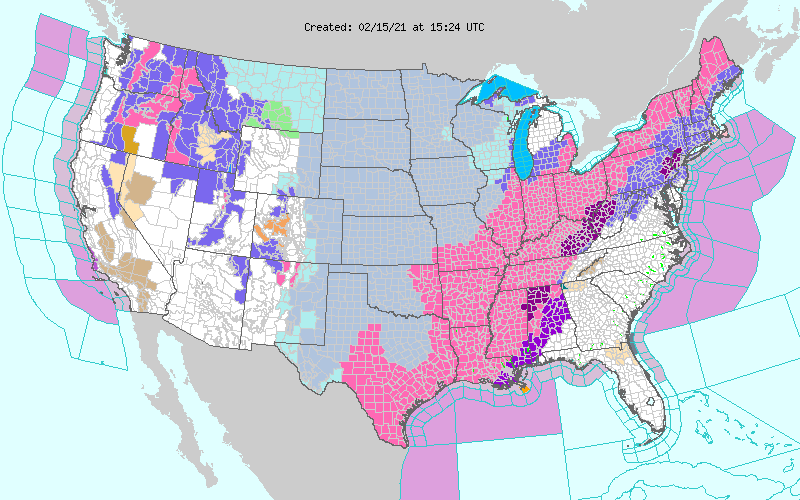
East Coast getting pounded

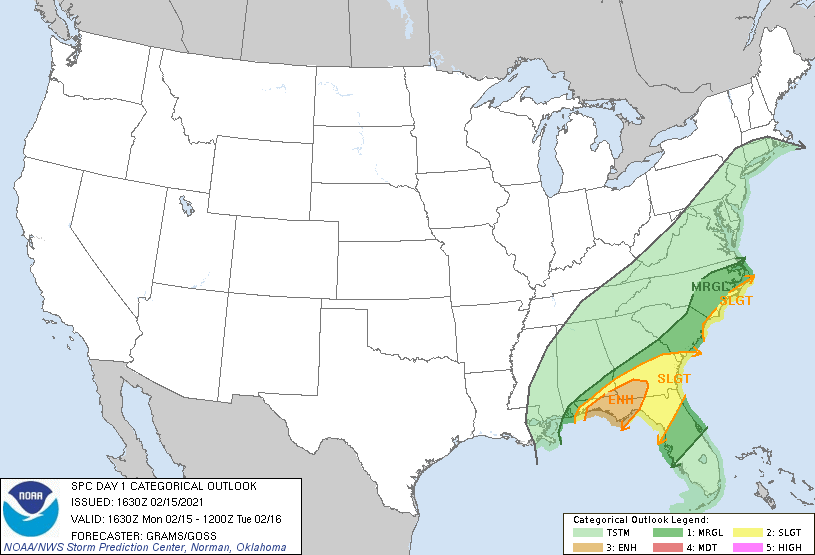
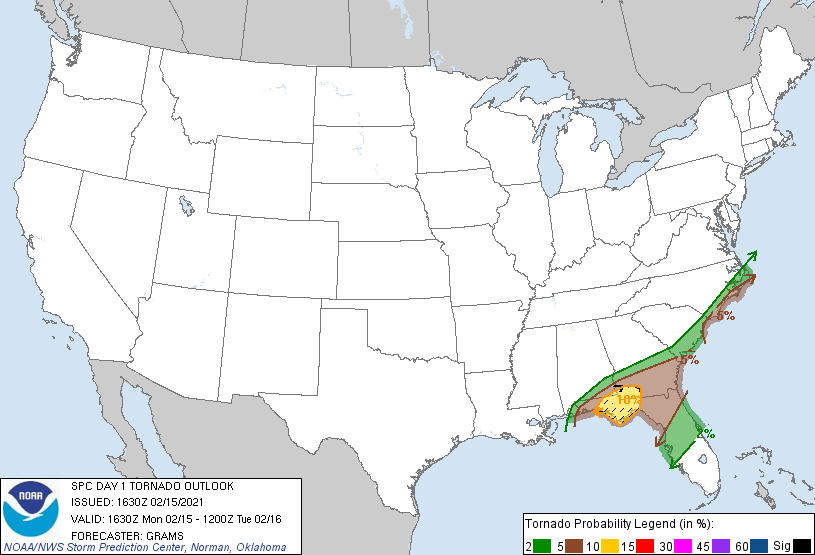
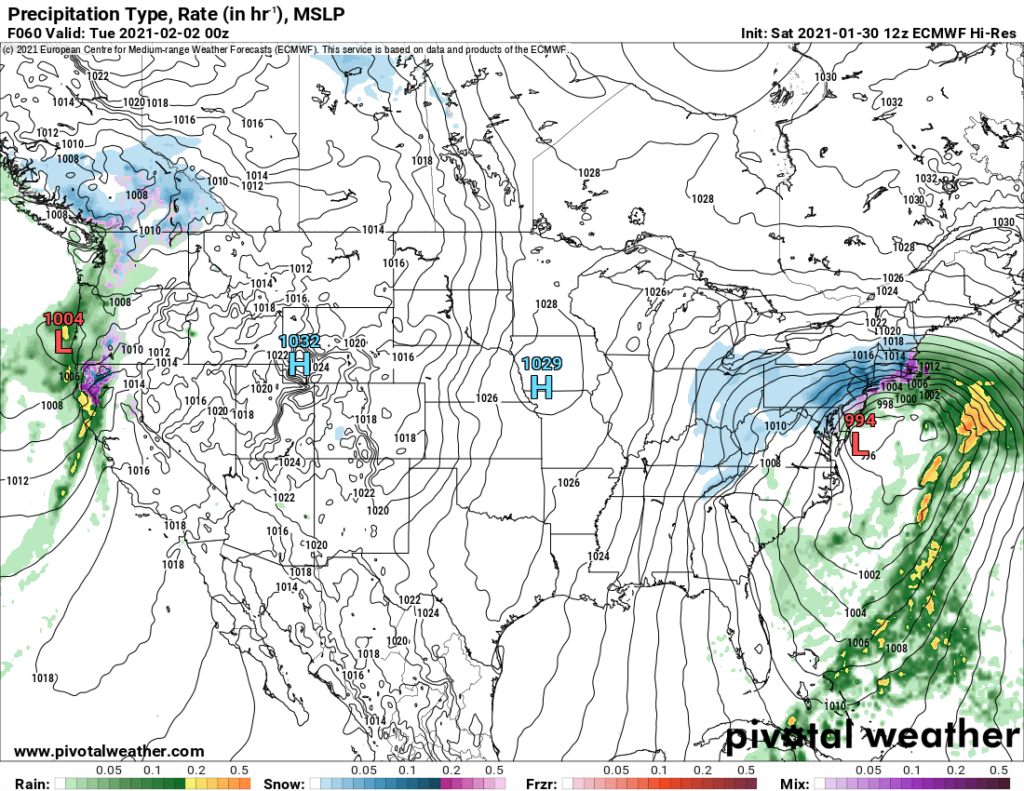
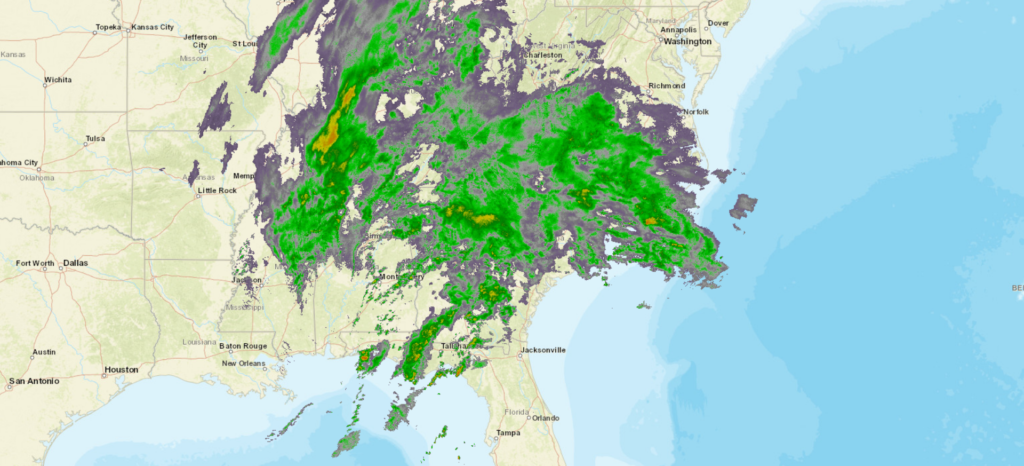
As a lot of people south and west of a line from Virginia Beach to Toledo can tell you, it’s raining in buckets out there. At least it is happening at the end of the long Holiday weekend, and surely sets the mood for a lot of us as we log back into work on Monday.

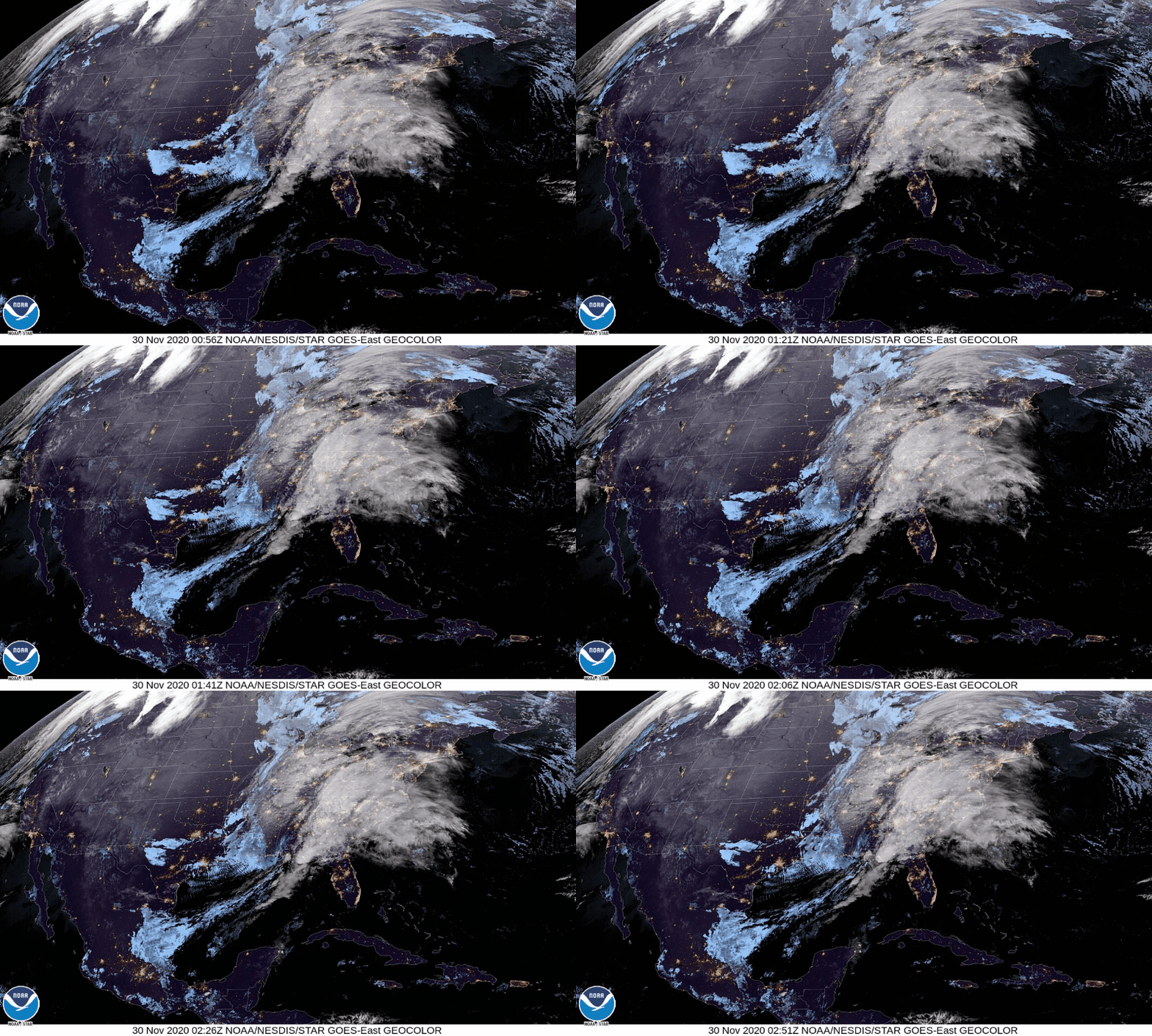
The satellite imagery belies the prolific nature of the rain. There isn’t much apparent rotation, no puffs of cumulonimbus across most of the band of clouds, with only a few apparent thunderstorms in the Florida Panhandle.

Now that I’ve warned you, perhaps you looked a little more closely, and found the circulation futher to the west of the erupting thunderstorms and swath of white clouds running from the Mid-Atlantic to north Florida.

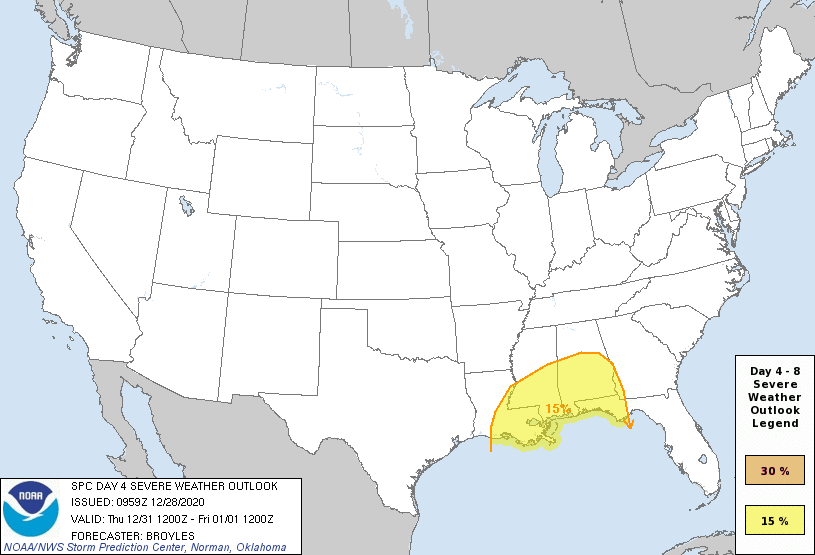
Indeed, the bulk of the rain so far is the result of warm frontal passage over the undulating Appalachian terrain. That boundary currently runs from eastern Kentucky through eastern North Carolina, has proven to be quite rainy. The warm sector south of the boundary and ahead of the cold front, which is setting off thunderstorms through the Panhandle, is also rife with showers and a few rumbles of thunder.

Perhaps the most winter like element to this storm imagery is the glut of water on the back side of the center of circulation, which is around Florence, Alabama. Usually, temperatures don’t allow for much condensation on the inverted trough during the summer, let alone torrential rain. Temperatures are chilly aloft, and this feature is pulling in more cold air into it. Not enough for snow in southern Indiana, but getting colder.

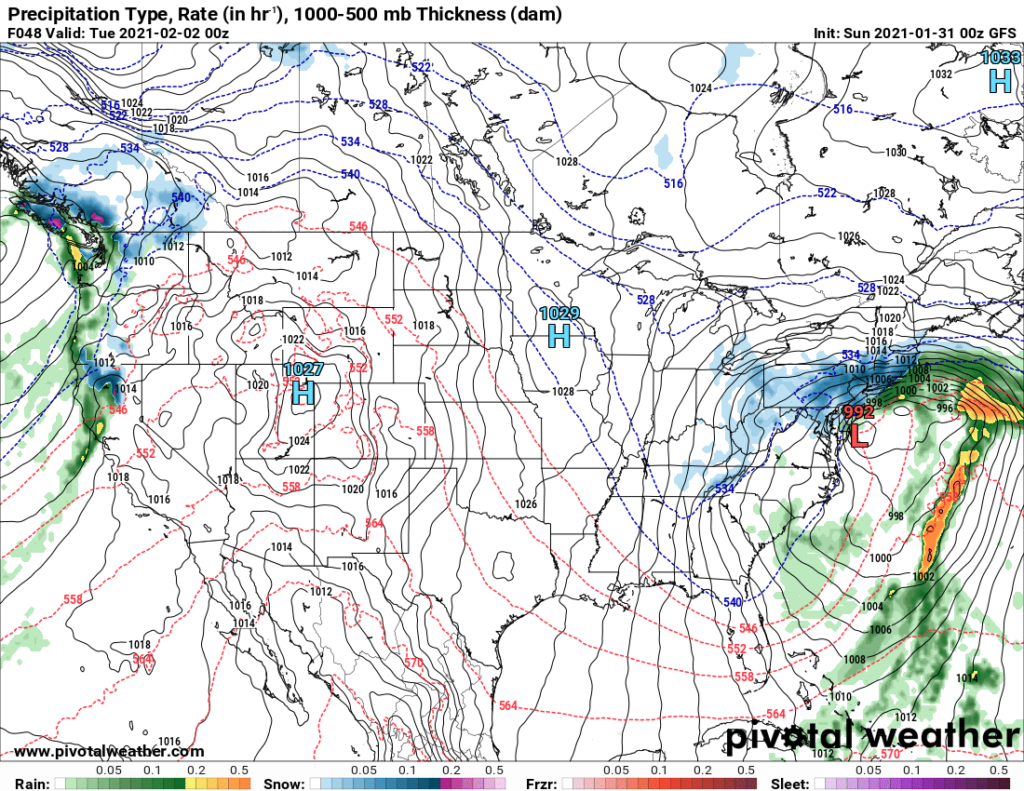
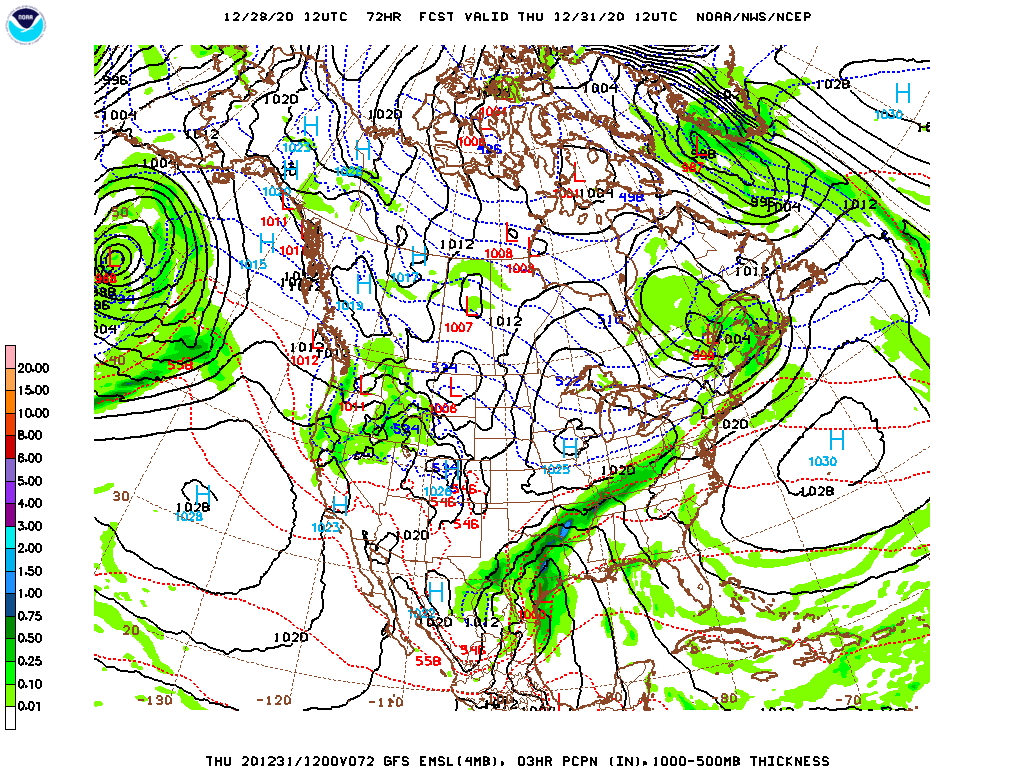
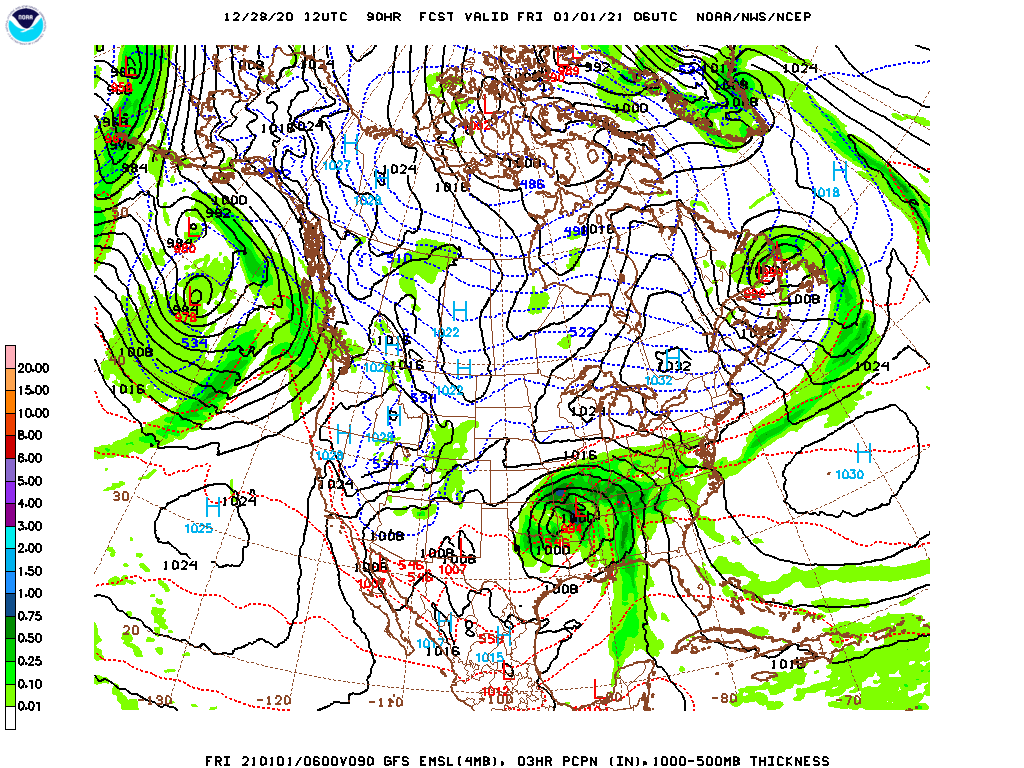
This feature has a great deal of support at the upper levels, an will continue to wind up. Away from the moisture rich southeast, and interference of the Appalachians, the cold front will become more evident, but by that time, the warm sector will be off shore. The low itself will barrel north, just like a winter nor’easter. It will have the wind of a nor’easter, and by the time the storm has shifted out of the Mid-Atlantic by Tuesday morning, Lake effect snow is anticipated for the eastern Great Lakes.

The heavy rain, along with some gusty wind and a rogue rumble of thunder will continue in coastal New England on Tuesday, but should shift off shore before Wednesday rolls around. This feature looks like a winter storm in the models, and a little bit on satellite and radar. It will almost feel like it, too.

Thanksgiving week has a few different plans

This weekend has been pretty nice across the country, with little in the way of watches or warnings or intrusions of cold air or wet weather. Unfortunately, it is only late November, and winter is not yet cancelled.

In fact, there maybe a couple of features that bring wet weather and less pleasant conditions to the country this week. First, early this week a feature will come out of the Rockies and move into the Plains, bringing rain, snow and cooler air to the middle of the country.

The feature will shift towards the Great Lakes, with showers and thunderstorms south from the Ohio River, and a real possibility of lake enhanced snow mid week before shifting out through New England late in the week.

A couple of other surges of wet weather will be possible with a feature arriving in the Pacific Northwest on Tuesday, which might lead to some significant problems in the mountains for casual travelers, but probably not those that are used to it.

Late in the week, a system will develop in the Lower Mississippi Valley with cold air driving in from the northwest. It will predominantly be a rain maker, initially in Mississippi and Louisiana, but shifting northeast before clobbering the Ohio Valley again, and eventually the entirety of the Eastern Seaboard. Again, it should all be rain at least through next Sunday, with some thunder further south.

Now, as for the beginning of December. A developing area of low pressure in the mid-Atlantic might make things a bit more wintry. But we’ll talk about that again at a different time.

Watch out for a strong polar vortex (That’s a good thing)

One aspect of emerging media and is the rapid dispersal of terms that come up in the news. Some things have always been there, and just get out of hand when they enter the news cycle. Things like “bomb cyclone” seem absurd to the point of frivolity if you don’t know the definition. I’ve gotten into debates on Twitter about Particularly Dangerous Situations being assigned to some weather watches, because the other Twitter user thought meteorologists were being overdramatic in their terminology. It’s a lesson in never using Social Media.

One term that really exploded in the last half decade was “Polar Vortex” which emerged in the midst of a persistent cold snap that was particularly cruel to the Eastern Seaboard. Since the East Coast is where most media, and really most of the people in the country reside, the term was foisted upon the country. There were some amusing consequences.

But mostly, it just annoyed meteorologists, because the colloquial definition of the polar vortex is not correct. As the media may have led some to believe, the polar vortex is not just a surge of cold air that dive bombs the mid latitudes out of the Arctic.

A vortex is something that rotates, The Polar Vortex, then, is the Arctic jet that spins around the North Pole. Ergo when it is strong, as is the case with all jet streams and streaks, it represents a sharp temperature contrast on other side of the streak. While it will certainly be cold north of, or within the vortex, it’s strength suggests that it will actually be fairly warm south of it.

Weaker flow can lead to some ripples in the jet, which can mean lobes of cold air pressing further south, particularly later in the year when high latitudes start to get colder on their own. Right now, though, it looks like we have a stout Polar Vortex to guide us into winter, and that is a good thing.

The Tropical Season just won’t quit

2020 has now surpassed 2005 as the most active tropical season in the North Atlantic in recorded history. We’ve exceeded the total of named storms by two, dipping further into the Greek alphabet than ever before. The long lived Eta has made the most of it’s first appearance in our meteorological lexicon, while Theta is spiraling out by the Azores, and Iota is preparing to landfall in Central America, near where Eta initially exploded on the scene. Similarly, Iota is expected to become a hurricane, with the present forecast asserting that Iota will be a major hurricane upon besetting the Nicaragua/Honduras border with more destruction.

Fortunately, despite all the action this year, we haven’t matched the pace of hurricanes or major hurricanes of 2005, which still holds the record in both categories. A bit of good news is that, at least for the next couple of weeks, it doesn’t look like Iota has a follow up on the immediate horizon, which will make it difficult to reach the hurricane or major hurricane numbers of 15 years ago.

Of course, I say that now, but it should be noted that the Tropical Storm Zeta of 2005, the last storm of that busy year was also the first storm of 2006. In a year like this, there is plenty of time for more new ground to be covered.

Cold front in the Midwest is the harbinger of winter

Today was a particularly active weather day, with low pressure in the Upper Midwest extending a cold front through the Great Lakes and on towards the Mississippi. The front itself has been the origin of severe weather from the Quad Cities south through Missouri and eventually across Big Muddy and through Illinois.

More indicative of what’s coming is the snow that fell in the Upper Midwest. 2-5″ fell in Minnesota as precipitation wrapped into the cold air diving into the country behind this system, merely a couple of hundred miles away from tornado warnings in northern Illinois.

More tangibly, I think these two images spell out the change coming for the end of the week. First, the radar imagery.

And now, take a look at tonight’s lows. There should be some significantly colder air northwest of those bands of thunderstorms.

And there is that sharp drop I promised. High pressure will move in at the surface over the Plains, and prevent much of a warm up for a couple of days. Eta will slow the cold front so all those places that will get copious rain from the tropics will remain warm few days longer.

If you didn’t believe it yet, winter looks like it is here, and will hang on.

October Forecaster of the Month

We are only a week into November, which means that we are awarding the forecaster of the month sooner than usual lately, and also, with as long as this week took, it’s clear time has no meaning anymore. The forecasting was pretty ok this month, though it leaned heavily on model guidance because of a west coast bias. It was Accuweather who did the best work for the month.

OutletMonth wins
The Weather Channel1
Victoria-Weather1
WeatherNation1
Accuweather1
Weatherbug
National Weather Service
Forecast.io
Outletyear wins
The Weather Channel10.5
Victoria-Weather10.41
Weatherbug6.49
WeatherNation6.08
National Weather Service4.91
Accuweather4.75
Forecast.io3.83

Tropical Storm Eta is moving through all parts of the Caribbean

Hurricane Eta plowed into Central America after exploding from a depression to a Category 5 storm in an alarmingly short time frame. It hit Guatemala, Honduras and particularly Nicaragua with vicious winds, but the particularly brutal part of the storm were torrential rains that killed hundreds thanks to flash floods and mudslides in mountainous terrain. The topography of Central America makes the region a death trap during strong tropical storms.

Now, Eta, instead of expiring in the mountains, turned back to the east and is forecast to wind through the Caribbean, hitting a lot of highlights along the way. Part of the reason it is expected to be able to continue on this path, despite a pending bisection of Cuba tonight, and a graze of the Florida Keys in the early part of the week, is how good it continues to look on satellite.

It’s generated quite a bit of convection to it’s north, and because it isn’t as strong as it looked, it will probably continue to feature broad swaths of directionless convection over places like south Florida as it wiggles along the Gulf Coast.

It’s not going to be a major storm in Florida, but it will last a while and be quite a soaker.

September forecaster of the month

Wow. What a wild month September was. Then again, September is the wildest of them all, almost every year. There are hurricanes, wild fires. every thing that can go wrong thanks to the stored heat of summer. No wonder, then, that it was Forecast.io, the robot army, that could keep the level head needed to secure this honor.

Outletyear wins
The Weather Channel9.5
Victoria-Weather9.41
Weatherbug6.49
WeatherNation5.08
National Weather Service4.91
Forecast.io3.83
Accuweather3.75

A video of the extensive, long lasting Iowa Derecho

Youtube user Tyler Spiedel had a Go Pro camera set up as the now infamous Iowa derecho blew through Cedar Rapids. For those that weren’t in it, it is a good demonstration of the sustained intensity of this particular storm, and the destruction it caused. Derechos look in many ways like hurricanes more than they do tornadoes.

Fortunately for Midwesterners, human and otherwise (see: The deer at about 40 seconds) storms of this intensity are extremely rare. When they do arise, though, the devastation is widespread.

The Atlantic grinds to a halt

The main topic of conversation in the weather community over the last couple of weeks has been twofold. Either we were talking about the wildfires in the west, or the hyperactive Atlantic, which at one point had 5 active named storms in the Atlantic.

The fires are temporarily tamed, but check out the NHC’s forecast page right now.

Not only are there no active tropical features, but there isn’t even anything on the horizon. The United States and the rest of North America should have a quiet tropical week or two. Thank goodness.

Of course, this should be paired with the standard notice that we are still in late September, and while we are on the other side of the tropical season peak, we are still in a point in the year that is typically fraught with cyclonic peril. Just because it is quiet now doesn’t mean we are out of the woods for the rest of the year. Check back in by the end of the week, and I’m sure there will be something out there to monitor.