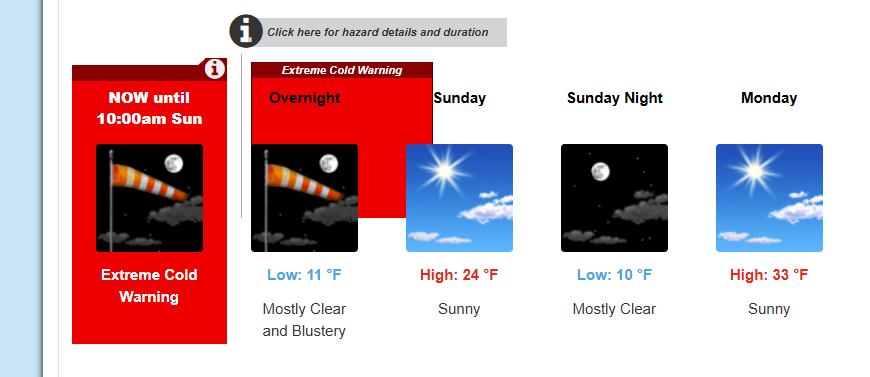
11:41PM: Stay warm on the east coast tonight, folks! It is going to be very chilly, with extreme cold warnings as far south as Baltimore.
from Victoria-Weather

11:41PM: Stay warm on the east coast tonight, folks! It is going to be very chilly, with extreme cold warnings as far south as Baltimore.
10:52AM: I can confirm from our forecast for Janesville last night that a weak little band of snow did come through, but there were no accumulations noted. There were light snow showers in the observations for about 3 hours, and now it is 36. It is cloudy, so don’t get ready to go tanning or anything quite yet.
12:57PM: The weather is quiet for a lot of the US right now, but there is one pocket of the nation that is looking ahead to a bit of snow. It is a very narrow pocket, and it isn’t much snow, though. This one is for the handful of people that might actually visit this site!
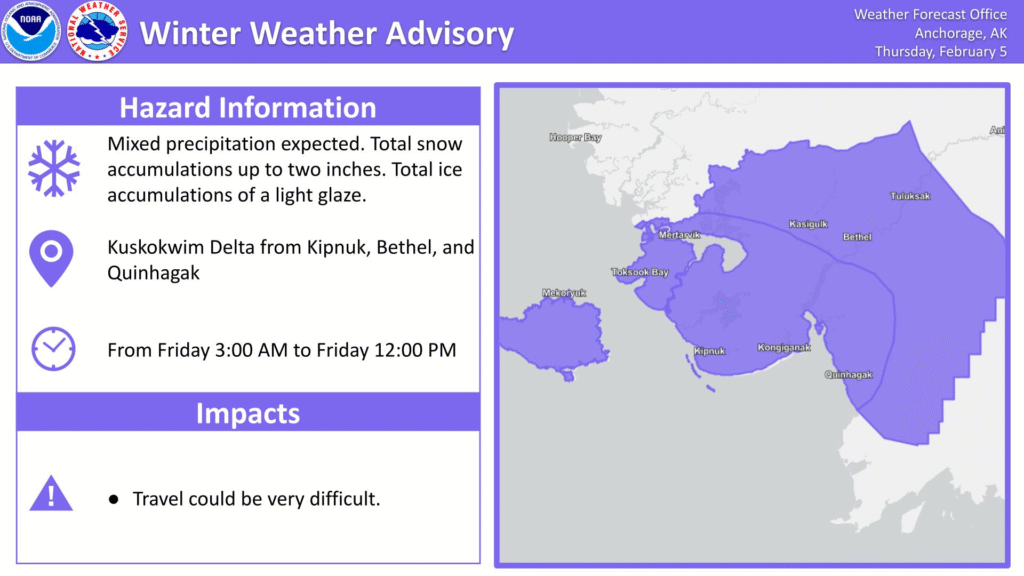
12:04AM: Wind? Yes? Snow in the mid-Atlantic and New England? No.
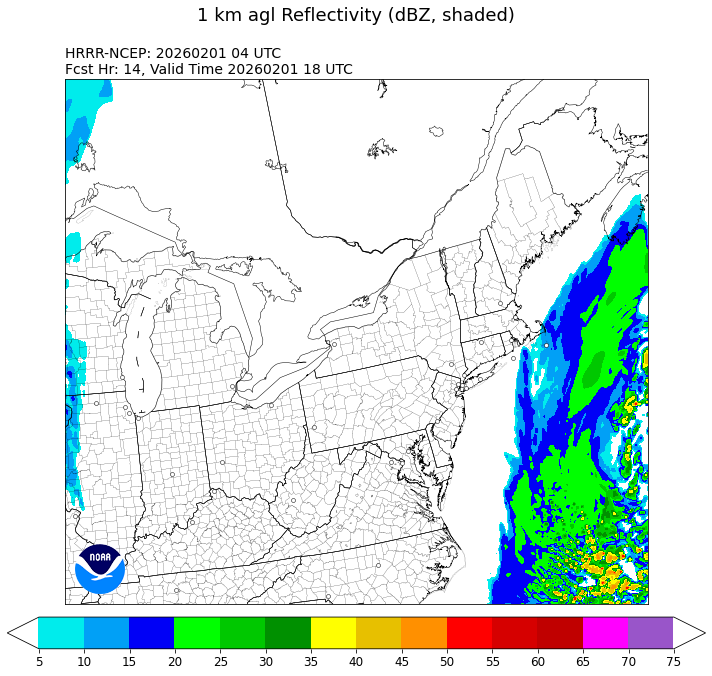
5:13PM: An interesting feature of the ongoing storm activity in the Southeast for the second weeeekend in a row is the absence of precipitation in the northern Plains. It’s cold, but it’s cold on top of a half inch of snow in some places. No changes in the near future, either.
9:57PM: OK, I take it back a little bit. There might be an additional quarter to half inch in some places tonight, particularly in Minnesota. And, actually, it will ride a warm front, so temperatures might be livable tomorrow. Melt some ice.
6:00pm: The storm last weekend was such a good measuring stick for how we can be affected by weather depending on where you live. The East Coast is returning to normal: plows are clearing the roads fairly easily, and kids aren’t getting more days off of school. In places like Nashville, so much ice brought down branches and power lines, and recovery will be measured in months. Right now, it’s just going to be an :effort to stay warm.
8:42PM: The upper level trough is beginning to rotate into the southeastern US, bringing a pool of cold air with it, and also pushing a head some flurries, which are extending along a line from the western Dakotas, south to Nebraska and at a sharp eastward angle towards Cincinnati. Keep an eye on that crook and where it ends up. That will be the center of our problems this weekend.
2:05PM: We get to enjoy a bit of peace and quiet, albeit without power and buried under snow in a big chunk of the country, but at least the weather will be quiet! Of course, we have our next system moving into the Pacific Northwest right now, and there are signals at the end of the week that another storm could be brewing in the southeast. Can’t be as bad as the last one though, right?
Right?
7:59PM: The snow and whatnot is done (whatnot is doing some heavy lifting there), but the cold is not. Anyone who has gone through winter knows that when the snow is on the ground, the temperatures have a much tougher time warming up.
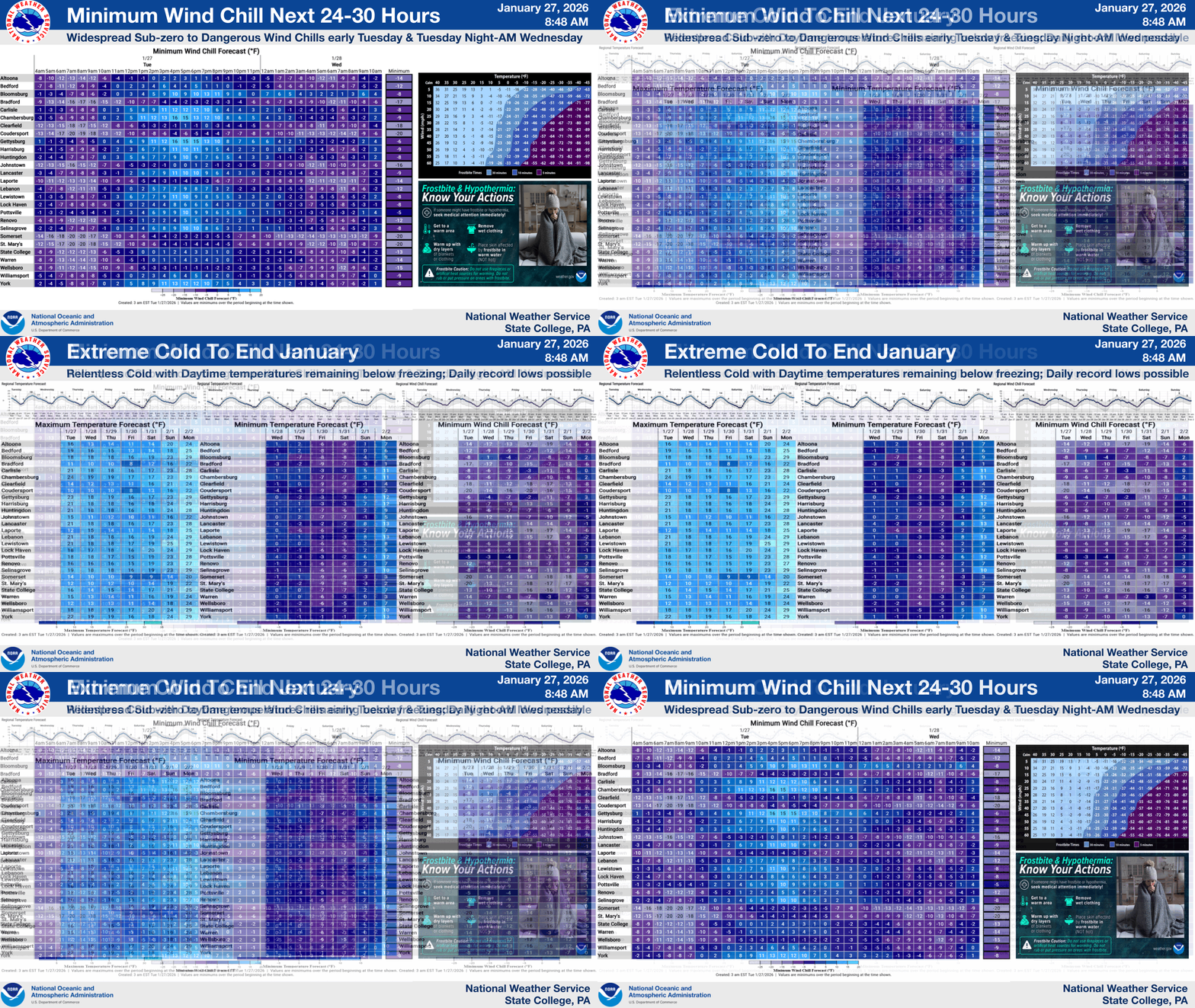
Brr.
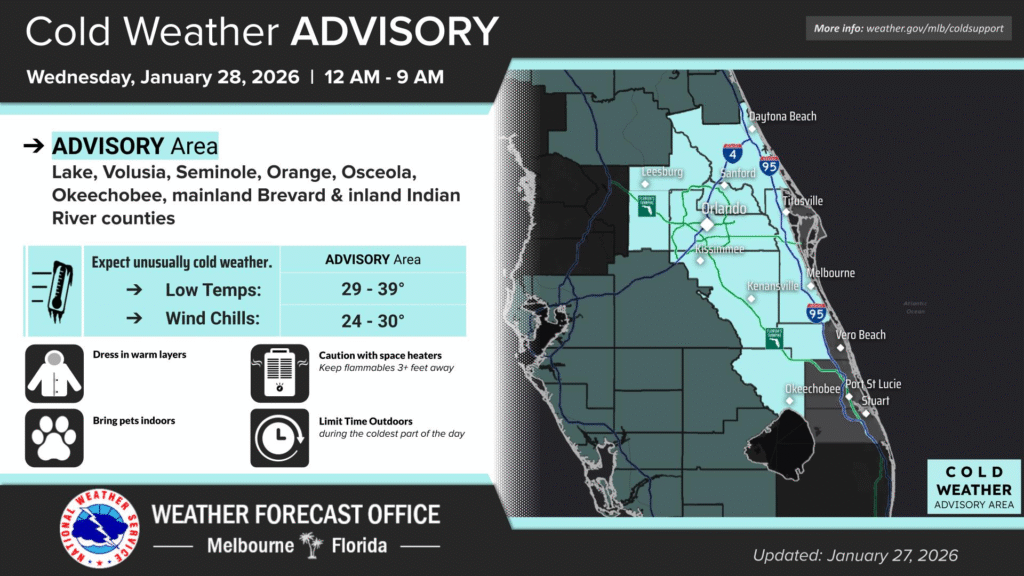
11:46: And now for something completely different: Freezing conditions extend deep into Florida tonight.
1:53PM: A broad area of baroclinicity, right along the transition zone of warm to cold air, leading to a vast area of precipitation, a lot of which was snow or ice. It’s tapered now, and the national radar is like nothing happened. Just make sure you stay warm out there.
11:27AM: The Great Lakes are at it again, resulting in some half foot accumulations just this morning. The unusual bit of news, though, is that there is a weak fetch off of Lake Superior, and that snow is in northeastern Minnesota. It’s definitely not captured by the models, and it is barely showing up on radar, but it IS identified in this local storm report. This is ski country, so I don’t think anyone is mad about it.
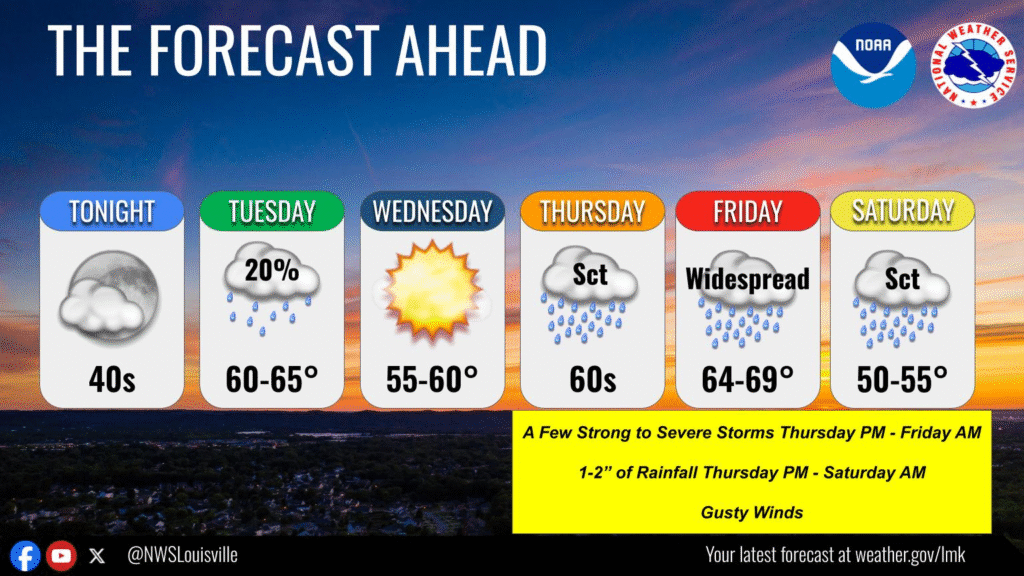
3:05PM: I mentioned in an update yesterday that the US was enjoying a bit of a reprieve from early season severe weather. That reprieve is nearing its end. Unfortunately, with the active pattern on either coast, it was just a matter of time, and the first hints of a bit of severe weather coming on the horizon are now showing up in Louisville’s extended outlook. This is Day 5 (January 9th) so things are absolutely still in flux.
12:12AM: There was a bit of rain in the Southeast today. Fortunately, it wasn’t followed by horribly cold air, but it was enough to bring the threat for some fog throughout the region. The hilly terrain north of Atlanta appears to be particularly susceptible into the early hours.
3:07PM: The first part of January can often feature some early season thunderstorms in the Southeast. That off-season outbreak that we can see a couple months before the real thing hasn’t really loomed as a threat this year. Instead, the focus is out west which is getting hammered by a relentless series of rain and snow. It’s not great for Californian’s right now, but the hope is going to be for an abundant spring and summer.
9:40PM: I was never worried about the northern batch of wet weather reaching Atlantic City, but there was a slim chance that the low moving out of the Carolinas would wobble towards the coast and threaten the forecast of dry weather. Well, the nearest the rain is on shore is in Kill Devil Hills, NC. We should be OK.