Snow totals in the mountains were less than one might expect for typical weather advisories. Sure, in the tallest peaks it piled up, but even at some of the resorts, there were only 3-5″ of snow, less on the heavily travelled corridors. Hopefully that means everyone did their holiday traveling safely.
Happy Thanksgiving!
Per the National Weather Service:
A significant winter storm will continue today across the Northern/Central Rockies and portions of the Central Plains. Gusty winds, heavy snow and ice are all possible especially across central Wyoming. Minor to moderate travel impacts are expected across Utah, Central/Southern Wyoming, Colorado and the Nebraska Panhandle.
NWS – State College
So I hope that you aren’t spending this holiday traversing the most desolate stretches of American highways, and instead are spending it with loved ones. Happy Thanksgiving!
A sigh of relief
There was an enhanced risk for severe weather in the Lower Mississippi Valley Monday, which often means a long night of terrible reports. The severe storms were over by nightfall, and there just weren’t as many reports as the high end events can often bring.
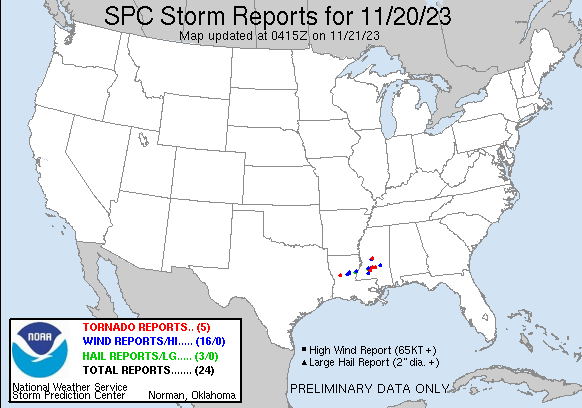
Furthermore, this storm system has brought a soaking rain to a part of the country that desperately needs it. Louisiana and Mississippi are dry, and will welcome the rain, especially if it comes without severe weather.
Snow season is here
I know a big chunk of the Northern Plains saw snow late in October, but it has been nice enough to begin November that I am guessing there is a cross section that doesn’t really remember the wintry weather. As we get deeper into November, every successive storm feature is more and more likely to bring winter weather advisories, or even more severe. For example, take a look at the current advisories from the NWS:
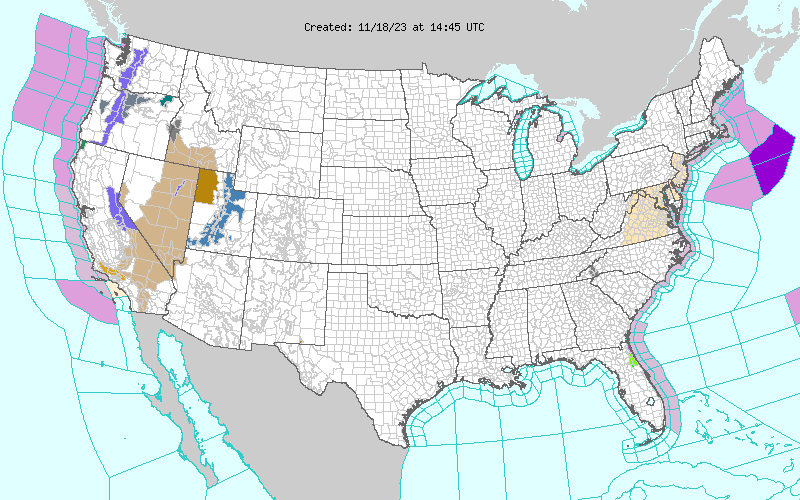
There are advisories for the Cascades, Sierras and Wasatch Mountains. It’s still early enough in the season that the first few waves necessitate a warning, but late enough that the snow is definitely here.
We wrote a couple of follow ups recently, from the approximate end of the Atlantic Hurricane Season and the October Forecaster of the Month. It is easy to wonder how different things would have looked if it had been a busy landfalling October, to see where our attention was and how the outlets did, comparatively. As it was, we were all pretty similar in effectiveness.
The Northern Lights were out in Canada
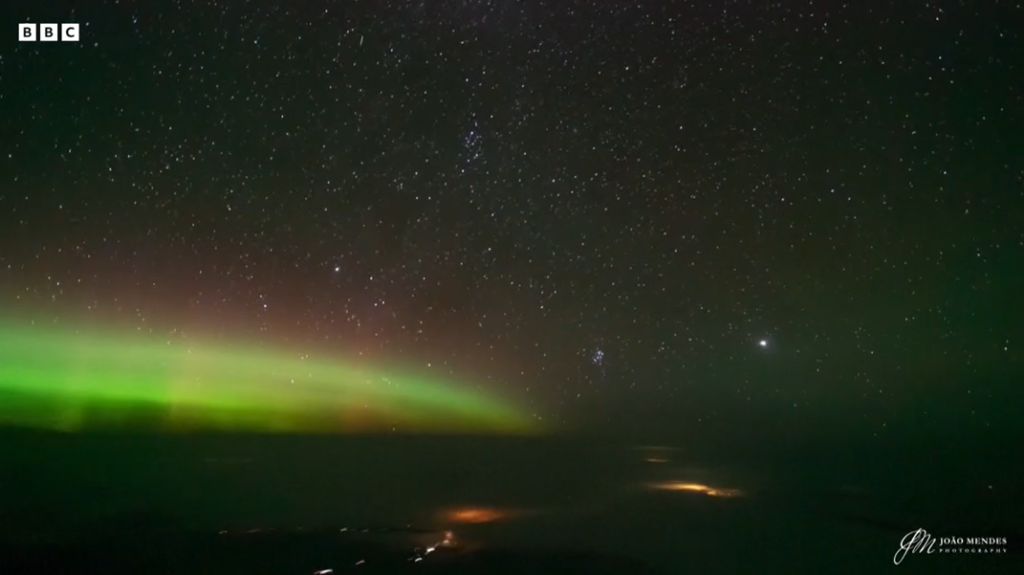
The full video from the BBC is here.
No volcano concerns for aviation
Remember 2010, when Eyjafjallajökull erupted in Iceland, and kicked up so much ash that it crippled North Atlantic aviation for weeks at a time? Well, there is another large eruption in Iceland anticipated near the Grindavik region, but for now, there are no concerns that there will be similar disruptions.
Temperatures in the early afternoon in Logan are in the upper 40s, should probably settle into the low 50s, just as we all suspected. But that wasn’t where the questions came up. We’ll see what the lows are like tomorrow morning. Dew points are in the mid 20s, which might affect how old it can get over night.
Cold air damming in effect

Cold air damming is something that happens when warm air tries to build from the southwest, but it doesn’t spill east over the Appalachians (usually). This is why you are seeing temperatures in the mid to upper 50s through Kentucky, and it is only in the mid 40s in Charlotte and Greenville.
Ski season coming for the Cascades and Northern Rockies
There is an area of low pressure hanging out in the Gulf of Alaska that is sending successive rounds of moisture into the Pacific Northwest. It isn’t a strong system and is really only notable because of the time of year it is arriving. It is the first real snow storm for the northern Rockies and Cascades, and will be persistent and cold enough to bring lasting snow.
